



অনুপাত (Ratio)
একই এককে সমজাতীয় দুইটি রাশির পরিমাণের একটি অপরটির কত গুণ বা কত অংশ তা একটি ভগ্নাংশ দ্বারা প্রকাশ করা যায়। এই ভগ্নাংশটিকে রাশি দুইটির অনুপাত বলে।
দুইটি রাশি p ও q এর অনুপাতকে লিখা হয়। p ও q রাশি দুইটি সমজাতীয় ও একই এককে প্রকাশিত হতে হবে। অনুপাতে p কে পূর্ব রাশি এবং q কে উত্তর রাশি বলা হয়।
অনেক সময় আনুমানিক পরিমাপ করতেও আমরা অনুপাত ব্যবহার করি। যেমন, সকাল ৪ টায় রাস্তায় যে সংখ্যক গাড়ী থাকে, 10 টায় তার দ্বিগুণ গাড়ী থাকে। এ ক্ষেত্রে অনুপাত নির্ণয়ে গাড়ীর প্রকৃত সংখ্যা জানার প্রয়োজন হয় না। আবার অনেক সময় আমরা বলে থাকি, তোমার ঘরের আয়তন আমার ঘরের আয়তনের তিনগুণ হবে। এখানেও ঘরের সঠিক আয়তন জানার প্রয়োজন হয় না। বাস্তব জীবনে এরকম অনেক ক্ষেত্রে আমরা অনুপাতের ধারণা ব্যবহার করে থাকি।
সমানুপাত (Proportion)
যদি চারটি রাশি এরূপ হয় যে, প্রথম ও দ্বিতীয় রাশির অনুপাত তৃতীয় ও চতুর্থ রাশির অনুপাতের সমান হয়, তবে ঐ চারটি রাশি নিয়ে একটি সমানুপাত উৎপন্ন হয়। a, b, c, এরূপ চারটি রাশি হলে আমরা লিখি a : b = c : d । সমানুপাতের চারটি রাশিই একজাতীয় হওয়ার প্রয়োজন হয় না। প্রত্যেক অনুপাতের রাশি দুইটি এক জাতীয় হলেই চলে।
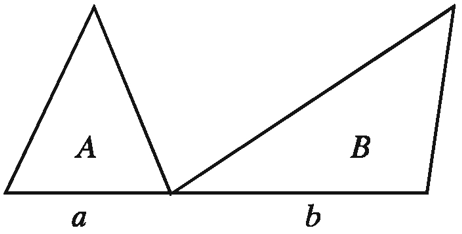
উপরের চিত্রে, দুইটি ত্রিভুজের ভূমি যথাক্রমে a ও b এবং এদের প্রত্যেকের উচ্চতা h একক। ত্রিভুজদ্বয়ের ক্ষেত্রফল A ও B বর্গএকক হলে আমরা লিখতে পারি
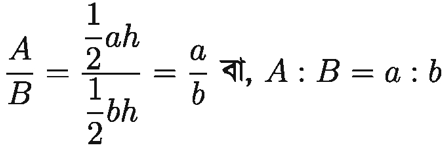
অর্থাৎ, ক্ষেত্রফলদ্বয়ের অনুপাত ভূমিদ্বয়ের অনুপাতের সমান।
ক্রমিক সমানুপাতী (Continued proportion)
a, b, c ক্রমিক সমানুপাতী বলতে বোঝায় a : b=b : c l
a, b, c ক্রমিক সমানুপাতী হবে যদি এবং কেবল যদি হয়। ক্রমিক সমানুপাতের ক্ষেত্রে সবগুলো রাশি এক জাতীয় হতে হবে। এক্ষেত্রে c কে a ও b এর তৃতীয় সমানুপাতী এবং b কে a ও c এর মধ্যসমানুপাতী বলা হয়।
উদাহরণ ১. A ও B নির্দিষ্ট পথ অতিক্রম করে যথাক্রমে এবং মিনিট। A ও B এর গড় গতিবেগের অনুপাত নির্ণয় কর।
সমাধান : মনে করি, A ও B এর গড় গতিবেগ প্রতি মিনিটে যথাক্রমে 1 মিটার ও 2 মিটার। তাহলে, মিনিটে A অতিক্রম করে মিটার এবং মিনিটে B অতিক্রম করে মিটার।
প্রশ্নানুসারে,
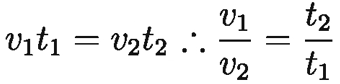
এখানে গতিবেগের অনুপাত সময়ের ব্যস্ত অনুপাতের সমান।খ) x : y = 5 : 6 হলে 3x : 5y
অনুপাতের রূপান্তর
এখানে অনুপাতের রাশিগুলো ধনাত্মক সংখ্যা।
১. a : b = c : d হলে, b : a = d : c [ব্যস্তকরণ (Invertendo)]
প্রমাণ : দেওয়া আছে,
বা, ad = bc [উভয়পক্ষকে bd দ্বারা গুণ করে ]
বা, [উভয় পক্ষকে ac দ্বারা ভাগ করে যেখানে a, c এর কোনটিই শূন্য নয়]
বা,
অর্থাৎ, b : a = d : c
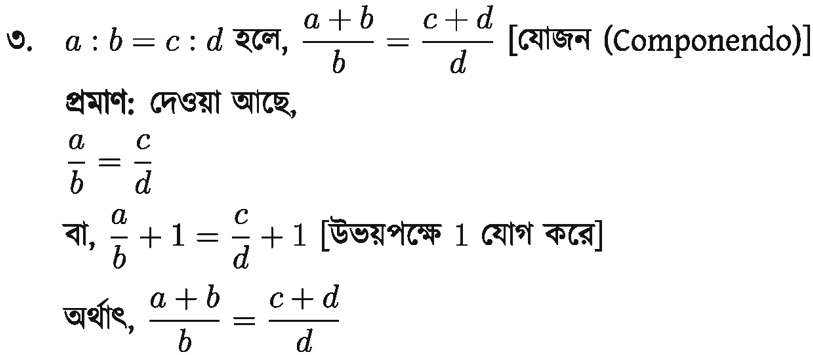
২. a : b = c : d হলে, a : c = b : d [একান্তরকরণ (Alternendo)]
প্রমাণ : দেওয়া আছে,
format('truetype')%3Bfont-weight%3Anormal%3Bfont-style%3Anormal%3B%7D%40font-face%7Bfont-family%3A'math17f39f8317fbdb1988ef4c628eb'%3Bsrc%3Aurl(data%3Afont%2Ftruetype%3Bcharset%3Dutf-8%3Bbase64%2CAAEAAAAMAIAAAwBAT1MvMi7iBBMAAADMAAAATmNtYXDEvmKUAAABHAAAADRjdnQgDVUNBwAAAVAAAAA6Z2x5ZoPi2VsAAAGMAAAAsmhlYWQQC2qxAAACQAAAADZoaGVhCGsXSAAAAngAAAAkaG10eE2rRkcAAAKcAAAACGxvY2EAHTwYAAACpAAAAAxtYXhwBT0FPgAAArAAAAAgbmFtZaBxlY4AAALQAAABn3Bvc3QB9wD6AAAEcAAAACBwcmVwa1uragAABJAAAAAUAAADSwGQAAUAAAQABAAAAAAABAAEAAAAAAAAAQEAAAAAAAAAAAAAAAAAAAAAAAAAAAAAAAAAAAAAACAgICAAAAAg1UADev96AAAD6ACWAAAAAAACAAEAAQAAABQAAwABAAAAFAAEACAAAAAEAAQAAQAAAD3%2F%2FwAAAD3%2F%2F%2F%2FEAAEAAAAAAAABVAMsAIABAABWACoCWAIeAQ4BLAIsAFoBgAKAAKAA1ACAAAAAAAAAACsAVQCAAKsA1QEAASsABwAAAAIAVQAAAwADqwADAAcAADMRIRElIREhVQKr%2FasCAP4AA6v8VVUDAAACAIAA6wLVAhUAAwAHAGUYAbAIELAG1LAGELAF1LAIELAB1LABELAA1LAGELAHPLAFELAEPLABELACPLAAELADPACwCBCwBtSwBhCwB9SwBxCwAdSwARCwAtSwBhCwBTywBxCwBDywARCwADywAhCwAzwxMBMhNSEdASE1gAJV%2FasCVQHAVdVVVQAAAAEAAAABAADVeM5BXw889QADBAD%2F%2F%2F%2F%2F1joTc%2F%2F%2F%2F%2F%2FWOhNzAAD%2FIASAA6sAAAAKAAIAAQAAAAAAAQAAA%2Bj%2FagAAF3AAAP%2B2BIAAAQAAAAAAAAAAAAAAAAAAAAIDUgBVA1YAgAAAAAAAAAAoAAAAsgABAAAAAgBeAAUAAAAAAAIAgAQAAAAAAAQAAN4AAAAAAAAAFQECAAAAAAAAAAEAEgAAAAAAAAAAAAIADgASAAAAAAAAAAMAMAAgAAAAAAAAAAQAEgBQAAAAAAAAAAUAFgBiAAAAAAAAAAYACQB4AAAAAAAAAAgAHACBAAEAAAAAAAEAEgAAAAEAAAAAAAIADgASAAEAAAAAAAMAMAAgAAEAAAAAAAQAEgBQAAEAAAAAAAUAFgBiAAEAAAAAAAYACQB4AAEAAAAAAAgAHACBAAMAAQQJAAEAEgAAAAMAAQQJAAIADgASAAMAAQQJAAMAMAAgAAMAAQQJAAQAEgBQAAMAAQQJAAUAFgBiAAMAAQQJAAYACQB4AAMAAQQJAAgAHACBAE0AYQB0AGgAIABGAG8AbgB0AFIAZQBnAHUAbABhAHIATQBhAHQAaABzACAARgBvAHIAIABNAG8AcgBlACAATQBhAHQAaAAgAEYAbwBuAHQATQBhAHQAaAAgAEYAbwBuAHQAVgBlAHIAcwBpAG8AbgAgADEALgAwTWF0aF9Gb250AE0AYQB0AGgAcwAgAEYAbwByACAATQBvAHIAZQAAAwAAAAAAAAH0APoAAAAAAAAAAAAAAAAAAAAAAAAAALkHEQAAjYUYALIAAAAVFBOxAAE%2F)format('truetype')%3Bfont-weight%3Anormal%3Bfont-style%3Anormal%3B%7D%3C%2Fstyle%3E%3C%2Fdefs%3E%3Cline%20stroke%3D%22%23000000%22%20stroke-linecap%3D%22square%22%20stroke-width%3D%221%22%20x1%3D%222.5%22%20x2%3D%2215.5%22%20y1%3D%2220.5%22%20y2%3D%2220.5%22%2F%3E%3Ctext%20font-family%3D%22ae2ef524fbf3d9fe611d5a8e90fefdc%22%20font-size%3D%2216%22%20font-style%3D%22italic%22%20text-anchor%3D%22middle%22%20x%3D%228.5%22%20y%3D%2214%22%3Ea%3C%2Ftext%3E%3Ctext%20font-family%3D%22Arial%22%20font-size%3D%2216%22%20font-style%3D%22italic%22%20text-anchor%3D%22middle%22%20x%3D%228.5%22%20y%3D%2237%22%3Eb%3C%2Ftext%3E%3Ctext%20font-family%3D%22math17f39f8317fbdb1988ef4c628eb%22%20font-size%3D%2216%22%20text-anchor%3D%22middle%22%20x%3D%2226.5%22%20y%3D%2226%22%3E%3D%3C%2Ftext%3E%3Cline%20stroke%3D%22%23000000%22%20stroke-linecap%3D%22square%22%20stroke-width%3D%221%22%20x1%3D%2237.5%22%20x2%3D%2250.5%22%20y1%3D%2220.5%22%20y2%3D%2220.5%22%2F%3E%3Ctext%20font-family%3D%22Arial%22%20font-size%3D%2216%22%20font-style%3D%22italic%22%20text-anchor%3D%22middle%22%20x%3D%2244.5%22%20y%3D%2215%22%3Ec%3C%2Ftext%3E%3Ctext%20font-family%3D%22Arial%22%20font-size%3D%2216%22%20font-style%3D%22italic%22%20text-anchor%3D%22middle%22%20x%3D%2243.5%22%20y%3D%2237%22%3Ed%3C%2Ftext%3E%3C%2Fsvg%3E)
বা, ad = bc [উভয়পক্ষকে bd দ্বারা গুণ করে]
বা, [উভয় পক্ষকে cd দ্বারা ভাগ করে যেখানে c, d এর কোনটিই শূন্য নয়]
বা,
অর্থাৎ, a : c = b : d
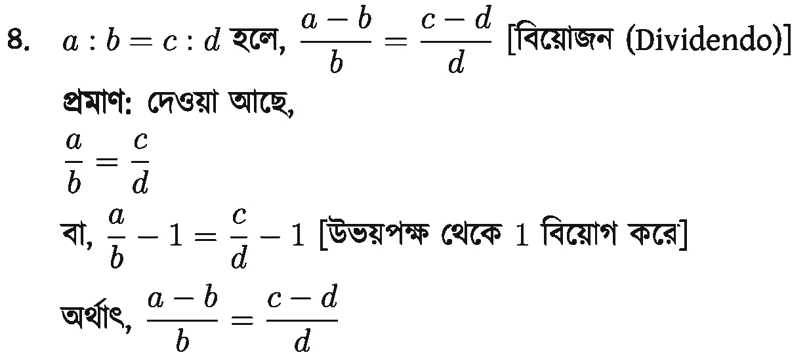
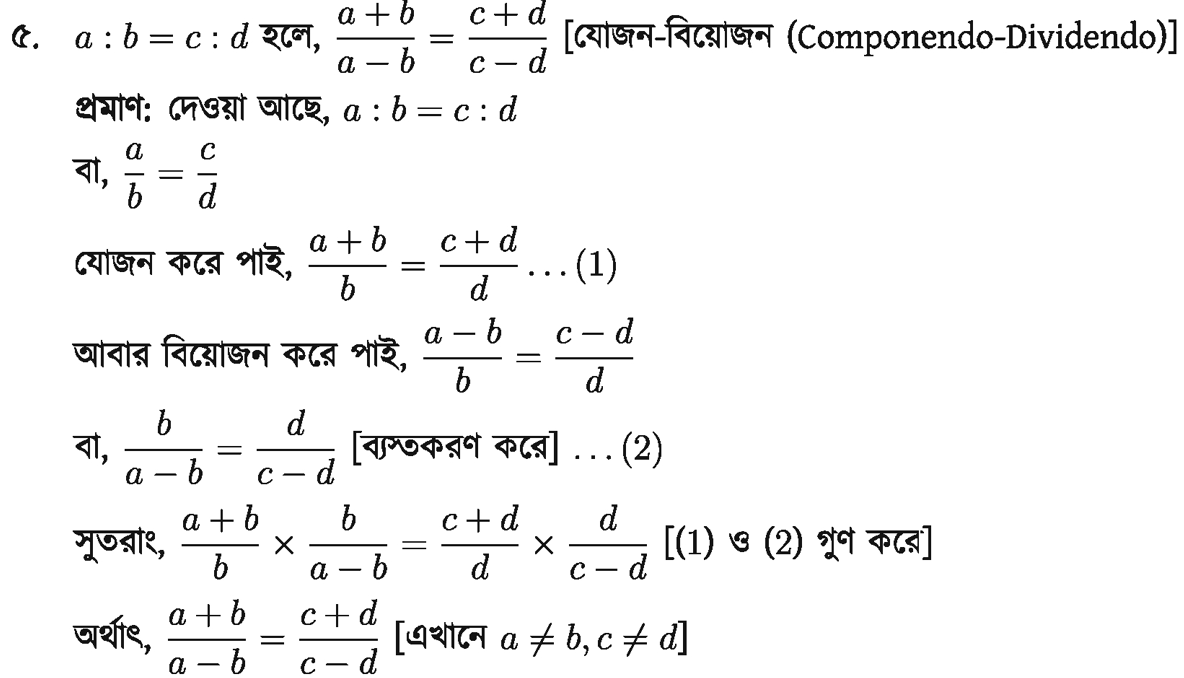
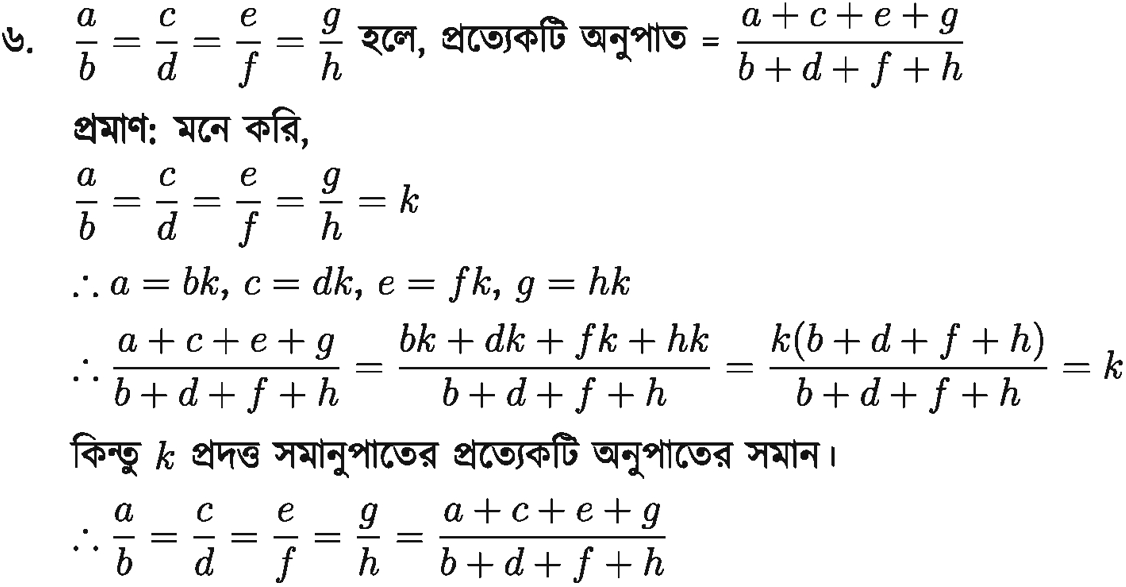
উদাহরণ ২. পিতা ও পুত্রের বর্তমান বয়সের অনুপাত 7 : 2 এবং 5 বছর পরে তাদের বয়সের অনুপাত ৪ : 3 হবে। তাদের বর্তমান বয়স কত?
সমাধান : মনে করি, পিতার বর্তমান বয়স a বছর এবং পুত্রের বর্তমান বয়স b বছর।
প্রশ্নের প্রথম ও দ্বিতীয় শর্তানুসারে যথাক্রমে পাই,
সমীকরণ (1) থেকে পাই,
সমীকরণ (2) থেকে পাই,
3 (a + 5 ) = 8 (b + 5)
বা, 3a + 15 = 8b + 40
বা, 3a - 8b = 40 – 15
বা, [(3) ব্যবহার করে]
বা,
বা, 5b = 50
format('truetype')%3Bfont-weight%3Anormal%3Bfont-style%3Anormal%3B%7D%3C%2Fstyle%3E%3C%2Fdefs%3E%3Ctext%20font-family%3D%22math162d90d223cf3e2239113a4963b%22%20font-size%3D%2216%22%20text-anchor%3D%22middle%22%20x%3D%228.5%22%20y%3D%2216%22%3E%26%23x2234%3B%3C%2Ftext%3E%3C%2Fsvg%3E) b = 10
b = 10
সমীকরণ (3) এ b = 10 বসিয়ে পাই,
পিতার বর্তমান বয়স 35 বছর এবং পুত্রের বর্তমান বয়স 10 বছর।
উদাহরণ ৩. যদি a : b = b : c হয়, তবে প্রমাণ কর যে,
সমাধান : দেওয়া আছে, a : b = b : c
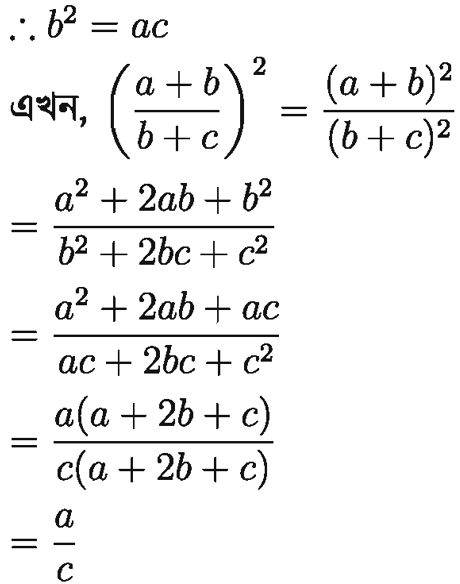
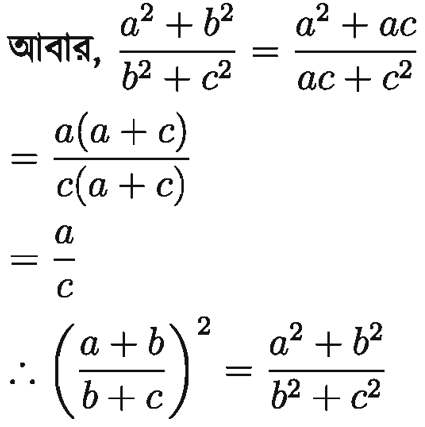
উদাহরণ ৪. হলে, দেখাও যে,
সমাধান :
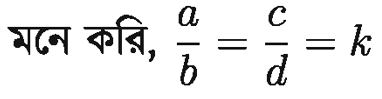
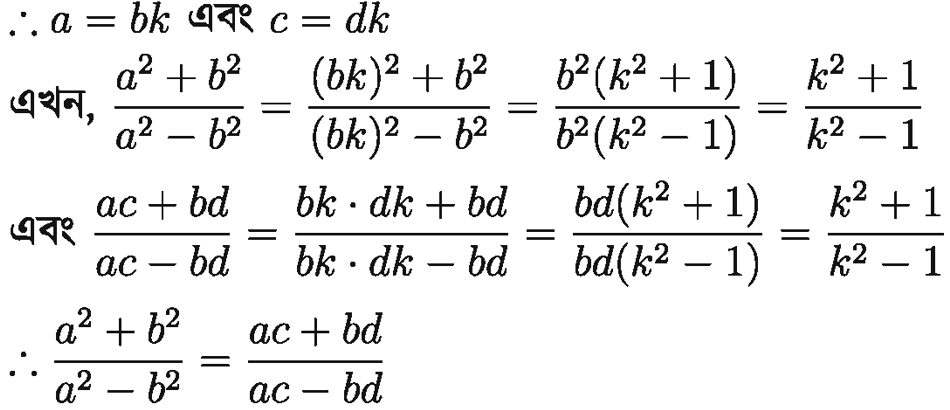
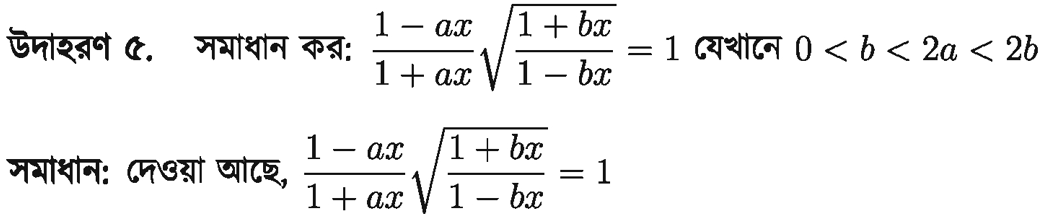
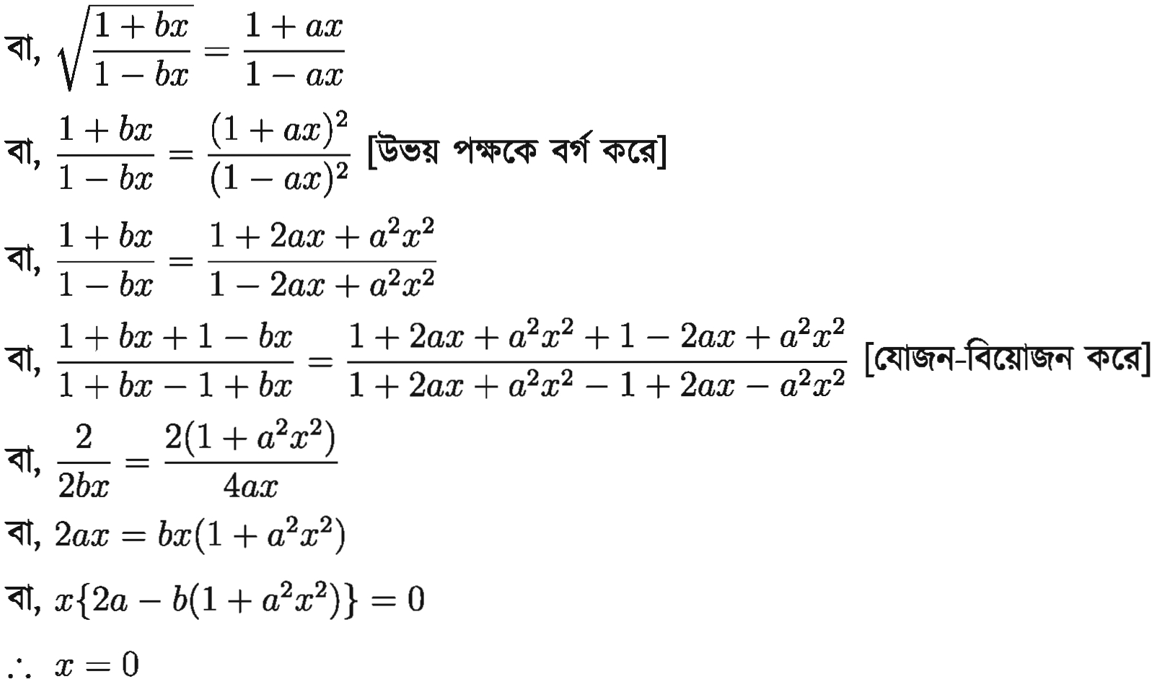
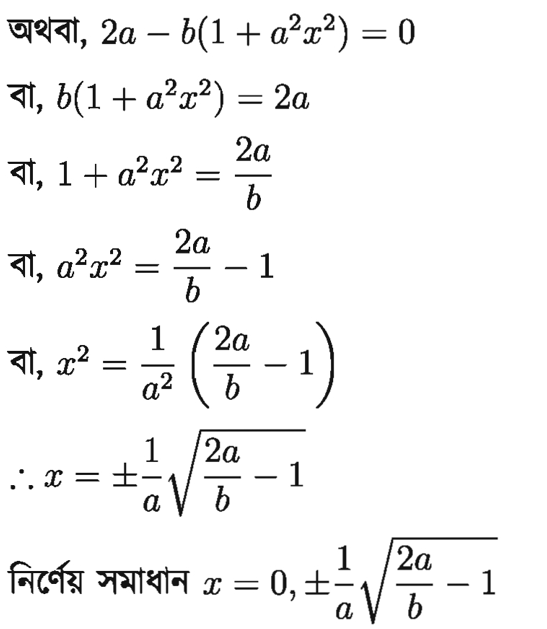
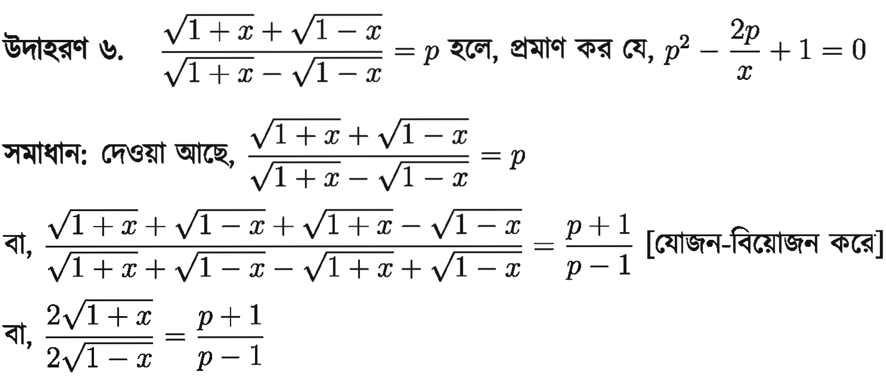
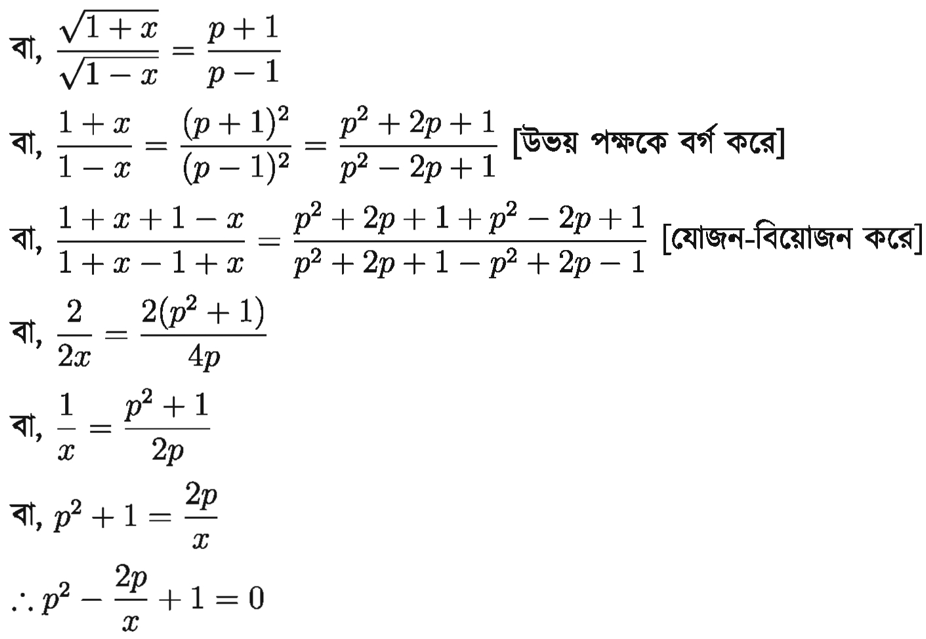
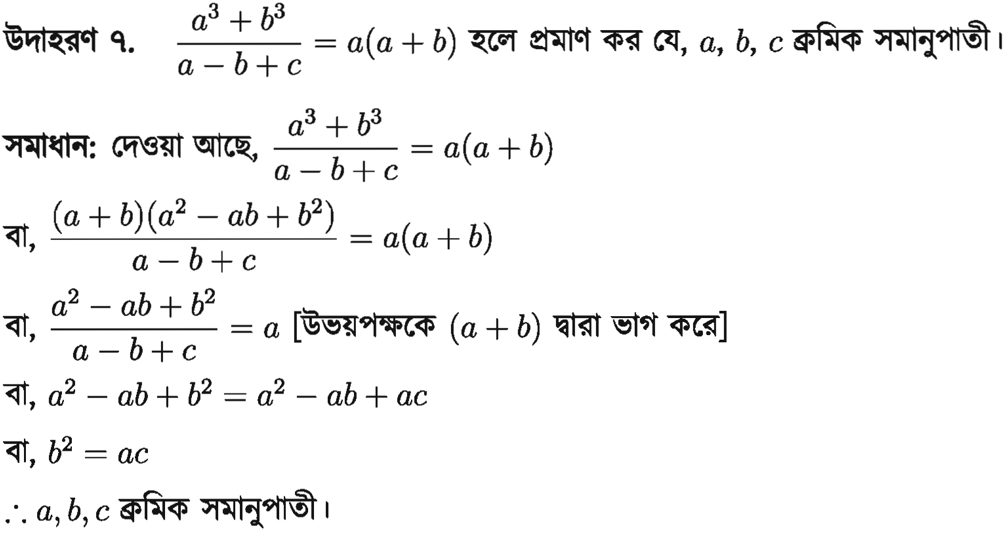
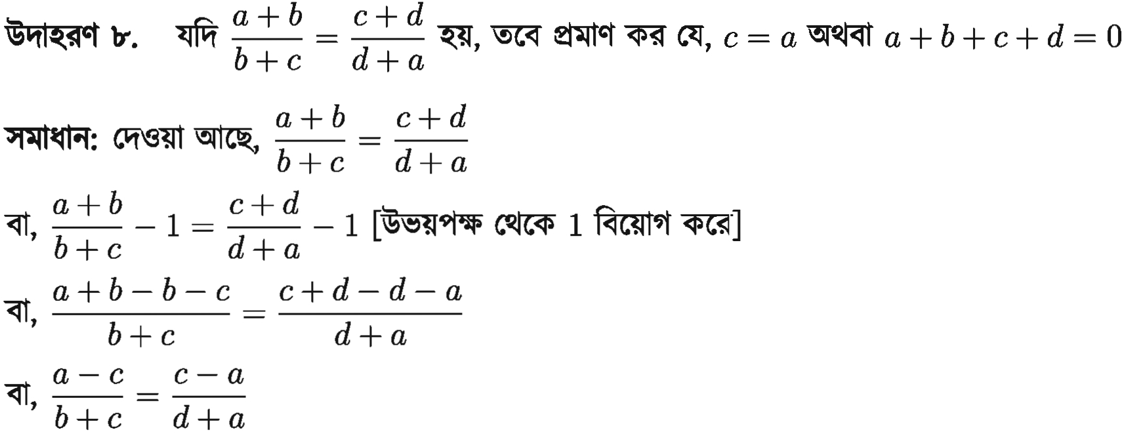
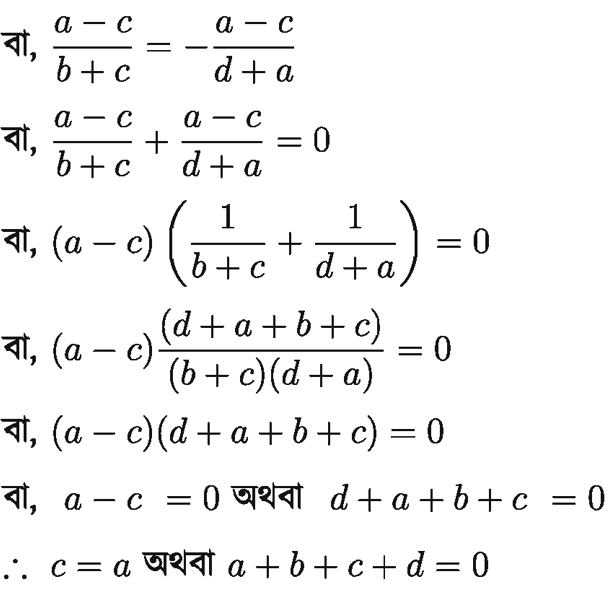
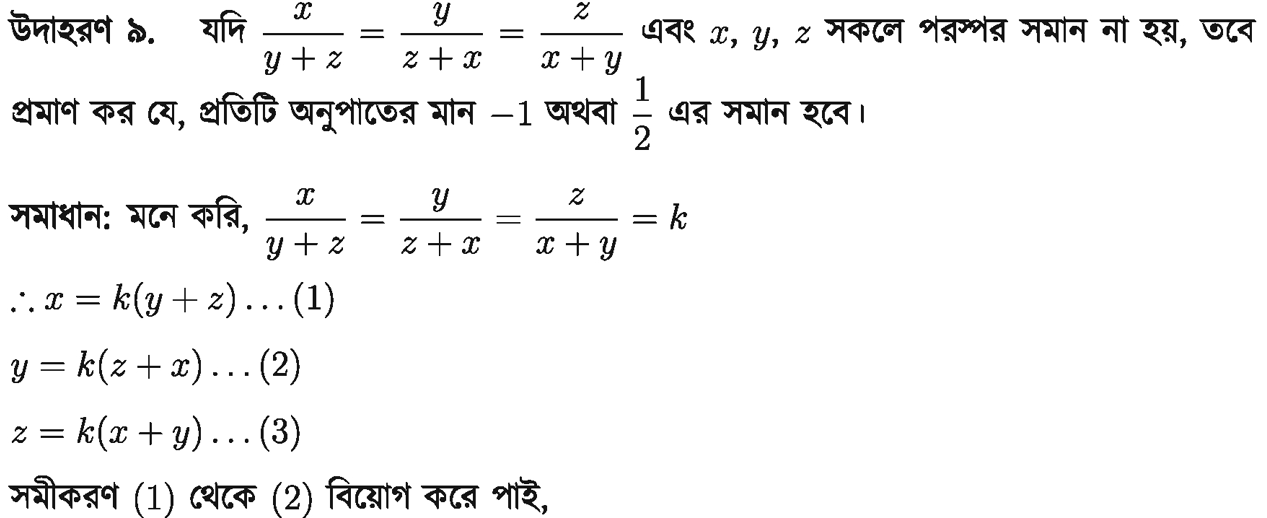
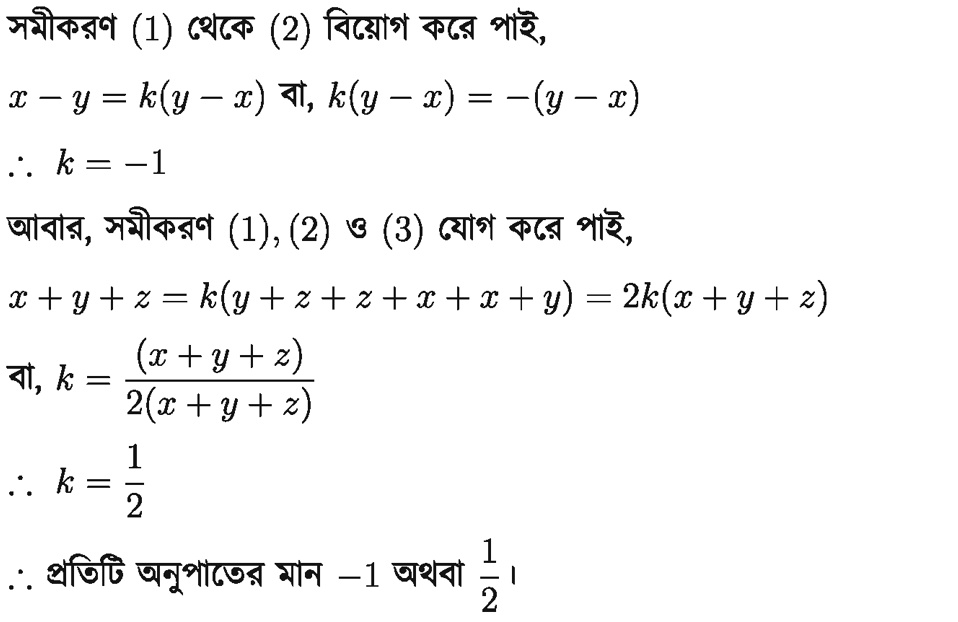

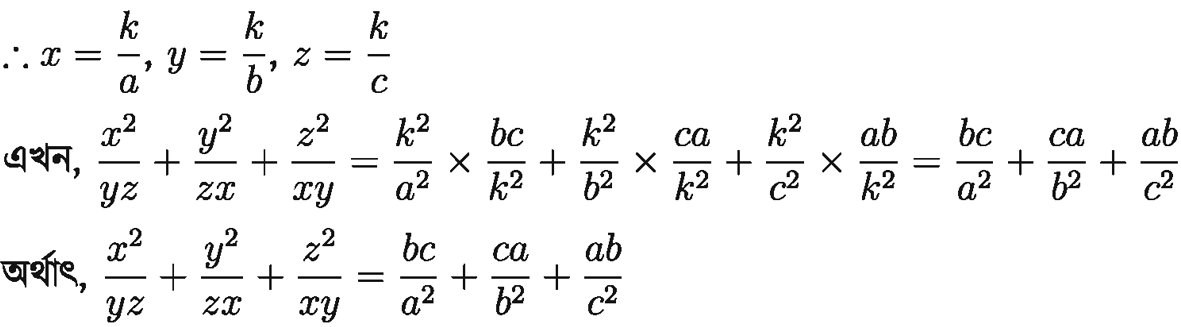
সমাধান : মনে করি, ax = by = cz = k
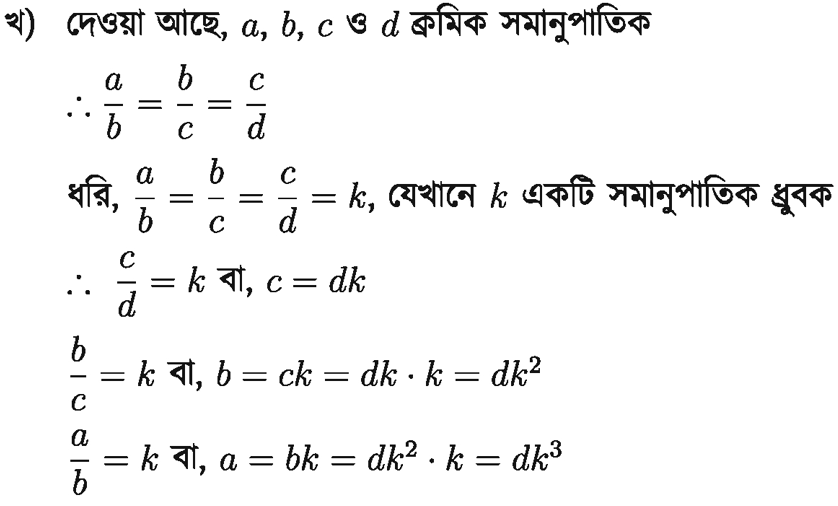
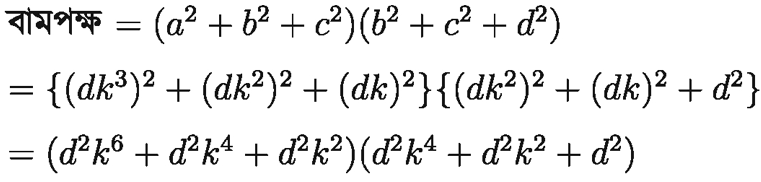
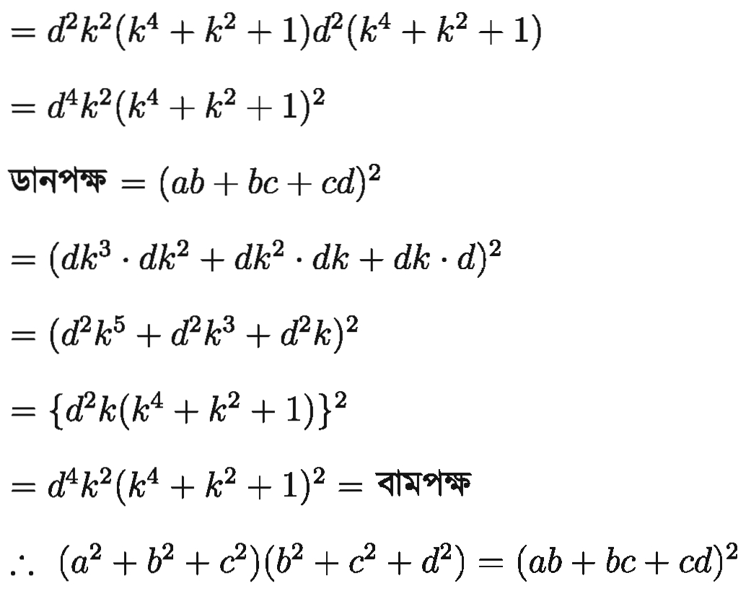
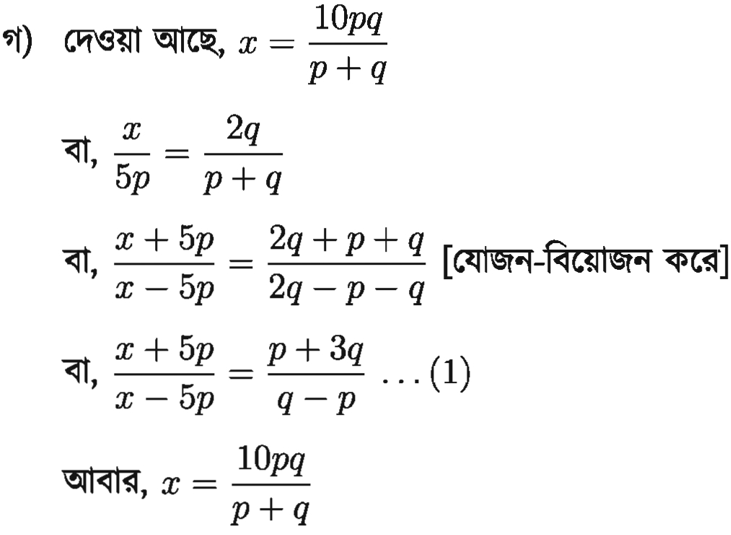
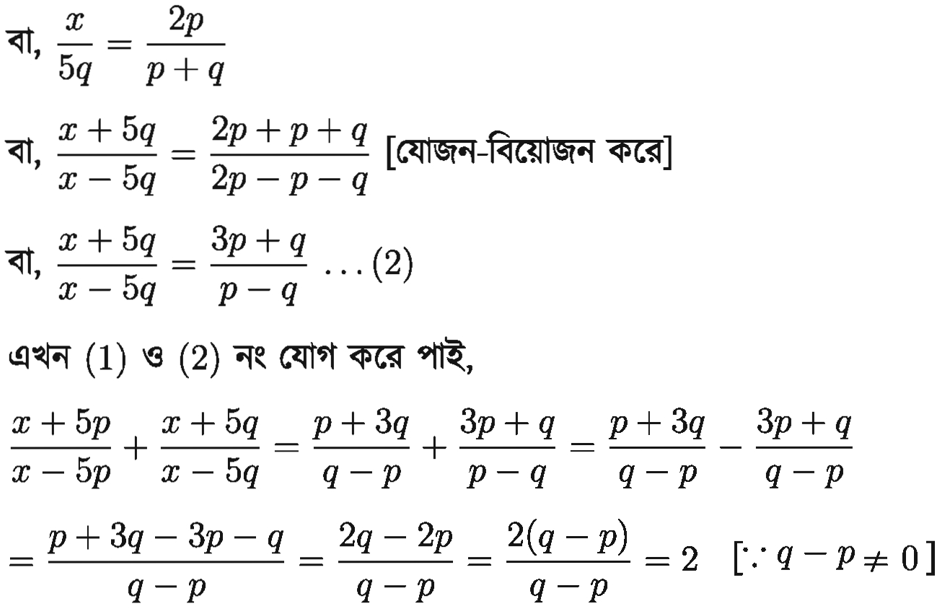
সমাধান :
ধারাবাহিক অনুপাত (Continued Ratio)
মনে কর, রনির আয় 1000 টাকা, সনির আয় 1500 টাকা এবং সামির আয় 2500 টাকা। এখানে, রনির আয় : সনির আয় 1000 : 1500 = 2 : 3; সনির আয় : সামির আয় 1500: 2500 = 3:51 = সুতরাং রনির আয় : সনির আয় : সামির আয় = 2 : 3 : 5 ।
দুইটি অনুপাত যদি ক : খ এবং খ : গ আকারের হয়, তাহলে এদেরকে সাধারণত ক : খ : গ আকারে লেখা যায়। একে ধারবাহিক অনুপাত বলা হয়। যেকোনো দুই বা ততোধিক অনুপাতকে এই আকারে প্রকাশ করা যায়। এখানে লক্ষণীয় যে, দুইটি অনুপাতকে ক : খ : গ আকারে প্রকাশ করতে হলে প্রথম অনুপাতটির উত্তর রাশি, দ্বিতীয় অনুপাতটির পূর্ব রাশির সমান হতে হবে। যেমন, 2 : 3 এবং 4 : 3 অনুপাত দুইটি ক : খ : গ আকারে প্রকাশ করতে হলে প্রথম অনুপাতটির উত্তর রাশিটিকে দ্বিতীয় অনুপাতটির পূর্ব রাশির সমান করতে হবে। অর্থাৎ ঐ দুইটি রাশিকে এদের ল.সা.গু. এর সমান করতে হবে।
এখানে, 3, 4 এর ল.সা.গু. 12
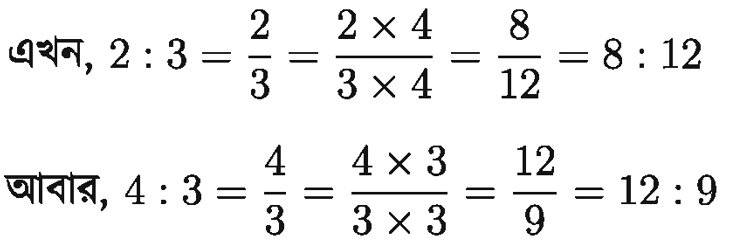
অতএব 2 : 3 এবং 4 : 3 অনুপাত দুইটি ক : খ : গ আকারে হবে 8 : 12 : 9
লক্ষ করি যে, উপরের উদাহরণে সামির আয় যদি 1125 টাকা হয়, তাহলে তাদের আয়ের অনুপাতও 8 : 12: 9 আকারে লেখা যাবে।
উদাহরণ ১২. ক, খ ও গ এক জাতীয় রাশি এবং ক : খ = 3 : 4, খ : গ = 6 : 7 হলে, ক : খ : গ কত?

উদাহরণ ১৩. একটি ত্রিভুজের তিনটি কোণের অনুপাত 3 : 4 : 5, কোণ তিনটি ডিগ্রিতে প্রকাশ কর।
সমাধান : মনে করি, প্রদত্ত অনুপাত অনুসারে কোণ তিনটি যথাক্রমে 3x, 4x এবং 5x। ত্রিভুজের তিন কোণের সমষ্টি = 180° ।
প্রশ্নানুসারে, 3x + 4x + 5x = 180° বা, 12x = 180° বা, x = 15°
অতএব, কোণ তিনটি হল,
3x = 3 x 15° : 45°
4x = 4 × 15° = 60°
এবং 5x = 5 x 15° = 75°
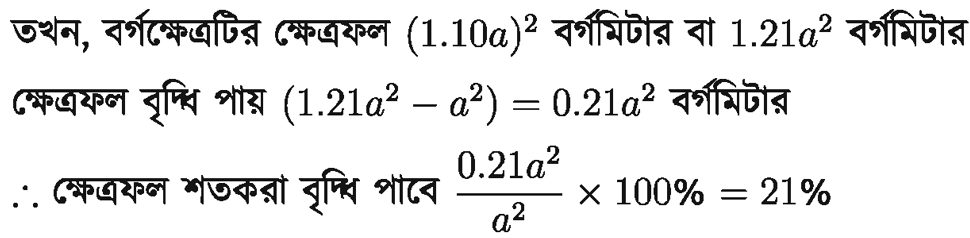
উদাহরণ ১৪. যদি কোনো বর্গক্ষেত্রের প্রত্যেক বাহুর পরিমাণ 10% বৃদ্ধি পায়, তবে তার ক্ষেত্রফল শতকরা কত বৃদ্ধি পাবে?
সমাধান : মনে করি, বর্গক্ষেত্রের প্রত্যেক বাহুর দৈর্ঘ্য ৫ মিটার। সুতরাং, বর্গক্ষেত্রটির ক্ষেত্রফল বর্গমিটার। 10% বৃদ্ধি পেলে প্রত্যেক বাহুর দৈর্ঘ্য হয় (a + a এর 10% ) মিটার বা 1.10a মিটার।
সমানুপাতিক ভাগ
কোনো রাশিকে নির্দিষ্ট অনুপাতে ভাগ করাকে সমানুপাতিক ভাগ বলা হয়। S কে a : b : c : d অনুপাতে ভাগ করতে হলে, S কে মোট a + b + c + d ভাগ করে যথাক্রমে a, b, c ও d ভাগ নিতে হয়। অতএব,
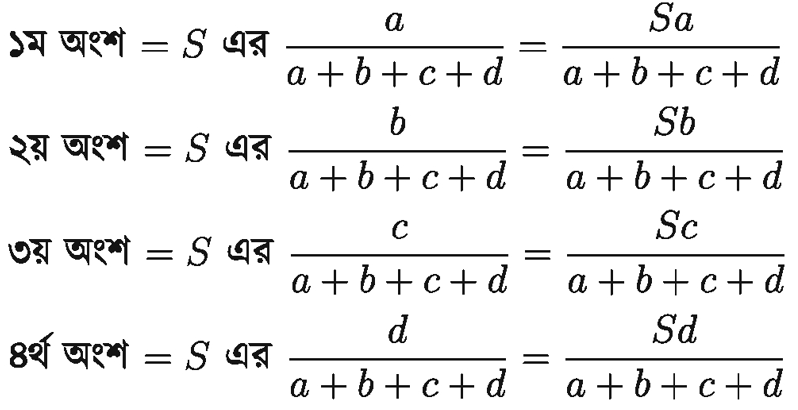
এভাবে যেকোনো রাশিকে যেকোনো নির্দিষ্ট অনুপাতে ভাগ করা যায়।
উদাহরণ ১৫. একটি আয়তাকার জমির ক্ষেত্রফল 12 হেক্টর এবং কর্ণের দৈর্ঘ্য 500 মিটার। ঐ জমির দৈর্ঘ্য ও প্রস্থের সঙ্গে অপর একটি জমির দৈর্ঘ্য ও প্রস্থের অনুপাত যথাক্রমে 3 : 4 এবং 2 : 3।
ক) প্রদত্ত আয়তাকার জমিটির ক্ষেত্রফল কত বর্গমিটার?
খ) অপর জমিটির ক্ষেত্রফল নির্ণয় কর।
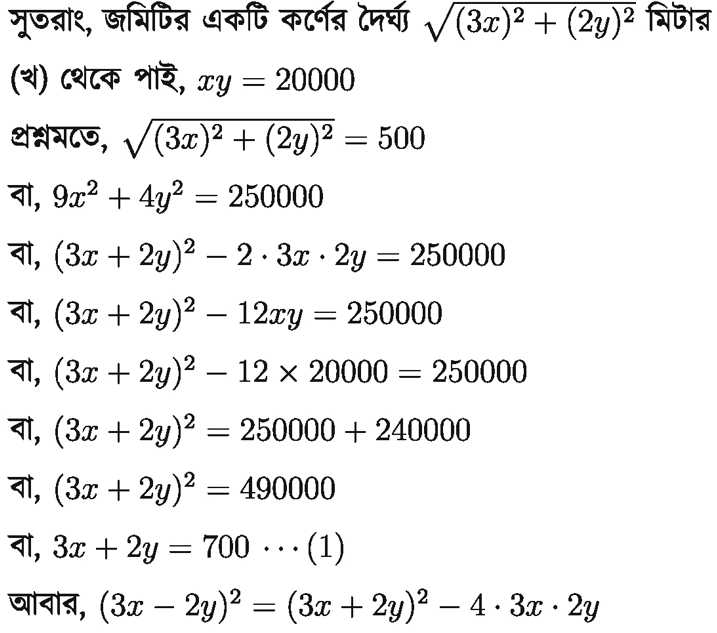
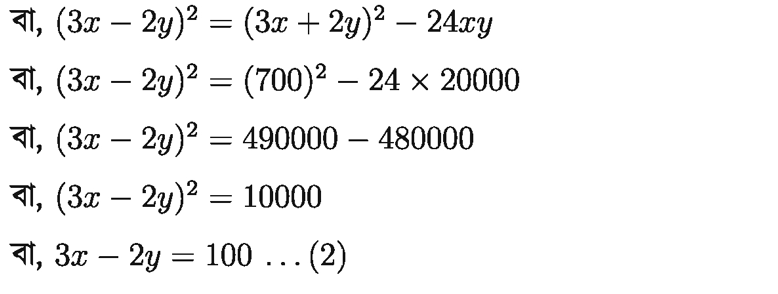
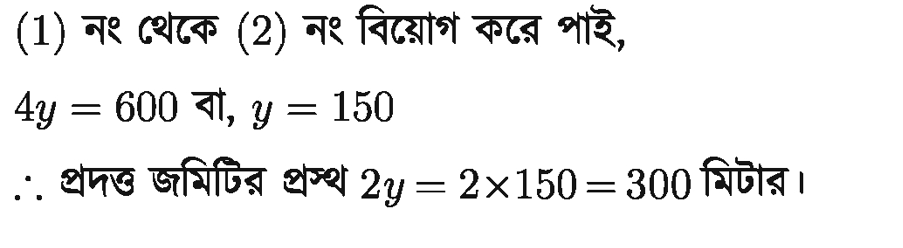
গ) প্রদত্ত জমিটির প্রস্থ নির্ণয় কর।
সমাধান :
ক) আমরা জানি, 1 হেক্টর = 10,000 বর্গমিটার
12 হেক্টর = 12 x 10,000 120000 বর্গমিটার
খ) দেওয়া আছে, প্রদত্ত জমির দৈর্ঘ্য এবং প্রস্থের সঙ্গে অপর একটি জমির দৈর্ঘ্য এবং প্রস্থের অনুপাত যথাক্রমে 3 : 4 এবং 2 : 3।
মনে করি, প্রদত্ত জমির দৈর্ঘ্য 3x মিটার এবং প্রস্থ 2y মিটার।
সুতরাং, অপর জমির দৈর্ঘ্য 4x মিটার এবং প্রস্থ 3y মিটার।
প্রদত্ত জমির ক্ষেত্রফল = 3x . 2y = 6xy বর্গমিটার
এবং অপর জমির ক্ষেত্রফল = 4x . 3y = 12xy বর্গমিটার
প্রশ্নমতে, 6xy = 120000 বা, xy = 20000
অপর জমির ক্ষেত্রফল = 12xy = 12 × 20000 = 240000 বর্গমিটার
গ) মনে করি, প্রদত্ত জমির দৈর্ঘ্য 3x মিটার এবং প্রস্থ 2y মিটার।
Related Question
View All
১ ক্লিকে প্রশ্ন, শীট, সাজেশন ও
অনলাইন পরীক্ষা তৈরির সফটওয়্যার!
শুধু প্রশ্ন সিলেক্ট করুন — প্রশ্নপত্র অটোমেটিক তৈরি!
Related Question
Complete Exam
Preparation
Learn, practice, analyse and improve