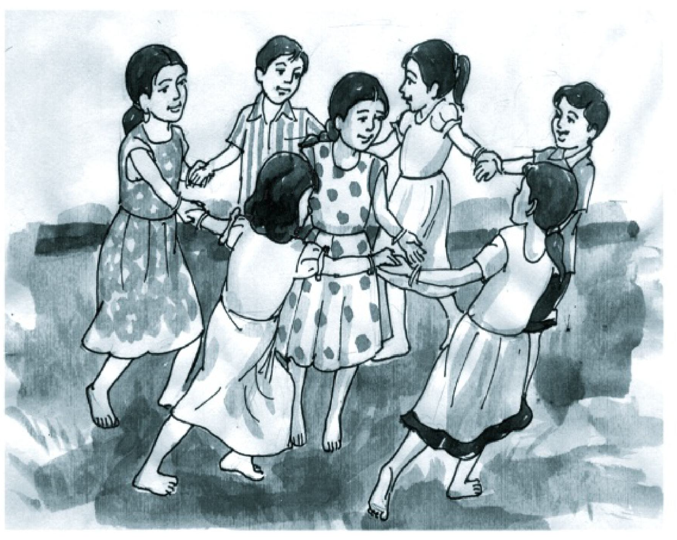
Generational naming refers to the practice of naming generations, which began in the early 20th century with the 'Lost Generation'. People name different generations to define the groups of people born in the same period of time.
One unique characteristic of the current generation is that they are hyperconnected and skilled in using technology. They remain connected using multiple means of high-tech communications. Again, one challenge of the current generation is that they are born in a world where life-changing events are happening every day. They need to adapt to this change.
The difference between singers from earlier generations and singers from the new generation is that singers from earlier generations were not brave enough to use music for protest: But the new generation is not afraid to do so. They are brave enough to speak out through their songs.
Gen Z grew up in the digital age, which is an age of information and technology. They grew up with social media, mobile internet and a lot of information. They are the first generation who always remains connected to multiple means of high-tech communications.
Many events happening around the world are shaping today's world. Some of these events are climate crises, political turmoils like the Ukraine-Russia war and the genocide in Palestine.
The term 'Great Depression' indicates the severe global economic decline that began in 1929 and lasted until about 1939. Unemployment and poverty, reductions in production and trade, and bank and business failures were prevalent around the world.
Some of the characteristics of Generation Z are that they are hyper connected yet often isolated, digitally adept but frequently anxious, and free yet constantly stressed. Moreover, they are brave and not afraid to protest when necessary.
Generational labels can benefit us by helping us to understand the changing social dynamics. Also, it can help us understand and define a particular period of time.
Music played a significant role in the July Uprising of 2024. Artists used their music to protest against oppression, injustice and massacre. Even, some rap songs became anthems of the uprising.
People who suffered the after-effects of World War I and the Great Depression belonged to the 'Lost Generation'. They were named in the early 20th century. They were the first generation to be named.

Learning Outcomes
After we have studied this unit, we will be able to
- ask and answer questions
- talk about familiar events
- read and understand texts
- write answers to questions
- write short compositions
Related Question
View All(a) artists; (b) generation; (c) brave; (d) were; (e) protest.

Modern Bangladeshi (a) artists like Shezan and Hannan use music to protest against injustice. Highlighting the bravery of the new (b) generation , their music became anthems of the July Uprising in 2024. It is evident that this new generation is (c) brave and different from earlier generations who (d) were often too afraid to use music for (e) protest.
(a) after; (b) leading; (c) entirely; (d) global; (e) shape.
Generational labels can be useful for understanding social change. The practice began with the 'Lost Generation' (a) after World War I. It continued with Generation X and Millennials (b) leading to Generation Z. Generation Z grew up (c) entirely in the digital age. They have witnessed significant (d) global events such as climate crises and political turmoil, which (e) shape. the world they are inheriting.
(a) afraid; (b) generation; (c) anthems; (d) Uprising; (e) brave.
When singers from earlier generations were (a) afraid to use music as a form of protest, the artists of new (b) generation like Shezan and Hannan have courageously spoken out. Their rap songs became (c) anthems of the July (d) Uprising in 2024. The new generation is no longer afraid; they are (e) brave and different.
adept = inept/incompetent
genocide = massacre/carnage
protest = support/approval
eventually = finally/ultimately/at last
aftermath = consequence/aftereffect/result
courageously = bravely/boldly
universally = narrowly/locally
often = seldom/rarely/hardly
war = battle
stressed = relaxed/ calm
In Bangladesh, each generation has struggled for progress. In 1971, the Baby Boomer generation fought for the independence of Bangladesh. Then, the next generation fought for democracy in 1980s. Recently, Gen Z has led the 2024 Uprising to overthrow the autocratic government.
Good governance is important for meeting the needs of new generations, because good governance provide them with the support they require and can take genuine steps to promote their vision and energy.
The legacy that today's young generation carries forward is the struggle for progress.
The 2018 road safety protests and the following brutal crackdown have sharpened Gen-Z's political awareness and reshaped the role of media in their life. Thus, the consciousness of Gen Z has changed.
The July Uprising of 2024 has made us realize that our methods are outdated and we need to adapt to the changes of the world. Unless we do so, we cannot meet the challenges of today's world.
Yes, I agree that the 2024 uprising was the result of Gen Z's political awareness. It is because the uprising was led by Gen Z who clearly understood the ineffective condition of politics. Being frustrated with the existing situation, they started to protest.
The struggles of earlier generations were the Liberation War of 1971 and the 1980s' fight for democracy against autocracy.
The Baby Boomer generation mainly took part in our Liberation War in 1971.
In the 1980s, the people of Bangladesh fought for democracy against autocracy.
The 2018 road safety protests and the following brutal crackdown have made Gen Z politically aware.
(a) liberated; (b) democracy; (c) born; (d) political; (e) uprising.
Each generation in Bangladesh has contributed to the struggle for progress. The freedom fighters (a) liberated the country in 1971 and laid the foundation for the 1980s' fight for (b) democracy. Gen Z (c) born around 2000 inherited this legacy. The 2018 road safety protests and the subsequent crackdown significantly raised Gen Z's (d) political awareness. Frustrated with the existing political system, this generation led the 2024 (е) uprising .
(a) democracy; (b) marked; (c) led; (d) political; (e) have/take.
Today's young generation born around 2000, carries the struggle for (a) democracy forward. The 2018 road safety protests and the brutal crackdown (b) marked a significant shift in Gen Z's consciousness, sharpening their political awareness. Finally, the 2024 uprising was (c) led by this generation, who realized the fruitlessness of (d) political establishments. To support Gen Z's ambitions, we must (e) have/take concrete steps, as political rhetoric has failed them.
struggle = fight/battle
liberate = enslave/subjugate
shift = change/ transition/switch
uprising = revolution/revolt
lay = set up/establish
progress = development/ advancement
autocracy = democracy
ineffectiveness = effectiveness/ success/strength
outdated = old/back-dated
challenges = demands/requirements/problems
The villagers hire Joynul to make chairs, tables, low stool and other furniture and also to do small repair work.
Nazma studied only up to class five. So, she is basically not an educated person.
Joynul's family lives in a small village.
Nazma does the household chores. She works relentlessly from morning till night.
Joynul and Nazma live from hand to mouth. Joynul is a carpenter, and Nazma is a housewife. They have a very limited income. Sometimes, Joynul does not get work, and the whole family suffers for that. So, I think their life is hard.
১ ক্লিকে প্রশ্ন, শীট, সাজেশন ও
অনলাইন পরীক্ষা তৈরির সফটওয়্যার!
শুধু প্রশ্ন সিলেক্ট করুন — প্রশ্নপত্র অটোমেটিক তৈরি!