

If the second term in an arithmetic sequence is 4, and the tenth term is 15, what is the first term in the sequence?
-
ক
1.18
-
খ
1.27
-
গ
1.38
-
ঘ
2.63


কোনো ধারার যেকোনো পাশাপাশি দুইটি পদের পার্থক্য সব সময় সমান হলে, সেই ধারাটিকে সমান্তর ধারা বলে।
উদাহরণ ১. 1 + 3 + 5 + 7 + 9 + 11 একটি ধারা। এই ধারাটির প্রথম পদ 1, দ্বিতীয় পদ 3, তৃতীয় পদ 5 ইত্যাদি।
এখানে, দ্বিতীয় পদ - প্রথম পদ = 3 – 1 = 2,
তৃতীয় পদ দ্বিতীয় পদ = 5 – 3 – 2, চতুর্থ পদ তৃতীয় পদ = 7 – 5 = 2,
পঞ্চম পদ চতুর্থ পদ = 9 – 7 = 5, ষষ্ঠ পদ পঞ্চম পদ = 11-9=2
সুতরাং, ধারাটি একটি সমান্তর ধারা।
এই ধারায় প্রাপ্ত দুইটি পদের বিয়োগফলকে সাধারণ অন্তর বলা হয়। উল্লেখিত ধারার সাধারণ অন্তর 2। ধারাটির পদ সংখ্যা নির্দিষ্ট। এ জন্য এটি একটি সসীম বা সান্ত ধারা (Finite Series)। উল্লেখ্য, সমান্তর ধারার পদসংখ্যা নির্দিষ্ট না হলে একে অসীম বা অনন্ত ধারা (Infinite Series) বলে। যেমন, 1 + 4 + 7 + 10 + . . . একটি অসীম ধারা। সমান্তর ধারায় সাধারণত প্রথম পদকে a দ্বারা এবং সাধারণ অন্তরকে d দ্বারা প্রকাশ করা হয়। তাহলে সংজ্ঞানুসারে, প্রথম পদ a হলে, দ্বিতীয় পদ a + d, তৃতীয় পদ a + 2d ইত্যাদি। সুতরাং, ধারাটি হবে, a + (a +d) + (a + 2d) + . . . ।
সমান্তর ধারার সাধারণ পদ নির্ণয়
মনে করি, যেকোনো সমান্তর ধারার প্রথম পদ a ও সাধারণ অন্তর d। তাহলে ধারাটির
প্রথম পদ = a = a + (1 – 1)d
দ্বিতীয় পদ = a + d = a + (2 – 1)d
তৃতীয় পদ = a + 2d = a + (3 – 1)d
চতুর্থ পদ = a + 3d = a + (4 – 1) d
. . . . . .
. . . . . .
n তম পদ = a + (n - 1) d
এই n তম পদকেই সমান্তর ধারার সাধারণ পদ বলা হয়। কোনো সমান্তর ধারার প্রথম পদ a, সাধারণ অন্তর d জানা থাকলে n তম পদে n 1, 2, 3, 4, . . . বসিয়ে পর্যায়ক্রমে ধারাটির প্রত্যেকটি পদ = নির্ণয় করা যায়।
মনে করি, একটি সমান্তর ধারার প্রথম পদ 3 এবং সাধারণ অন্তর 2। অতএব, ধারাটির n তম পদ = 3 + (n – 1) × 2 = 2n + 1 ।
উদাহরণ ২. 5 + 8 + 11 + 14 + . . . ধারাটির কোন পদ 383 ?
সমাধান : ধারাটির প্রথম পদ a = 5, সাধারণ অন্তর d = 8 – 5 = 11 – 8 = 14 – 11 = 3
ইহা একটি সমান্তর ধারা।
মনে করি, ধারাটির n তম পদ = 383
আমরা জানি, n তম পদ = a + (n – 1)d
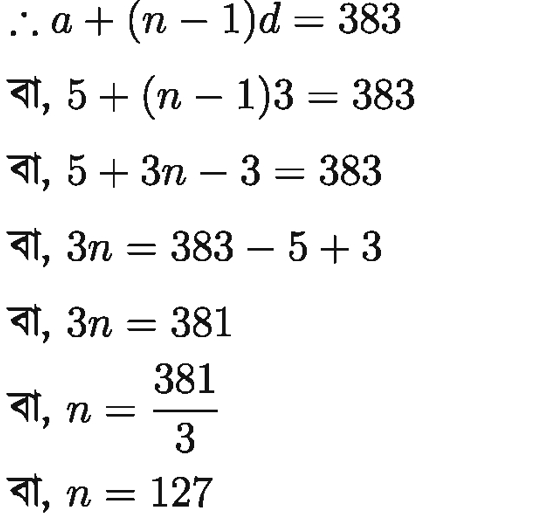
প্রদত্ত ধারার 127 তম পদ = 383 I
সমান্তর ধারার n সংখ্যক পদের সমষ্টি
মনে করি, যেকোনো সমান্তর ধারার প্রথম পদ a, শেষ পদ p, সাধারণ অন্তর d, পদ সংখ্যা n এবং ধারাটির n সংখ্যক পদের সমষ্টি ।
ধারাটিকে প্রথম পদ হতে শেষ পদ এবং বিপরীতক্রমে শেষ পদ হতে প্রথম পদ লিখে পাওয়া যায়,

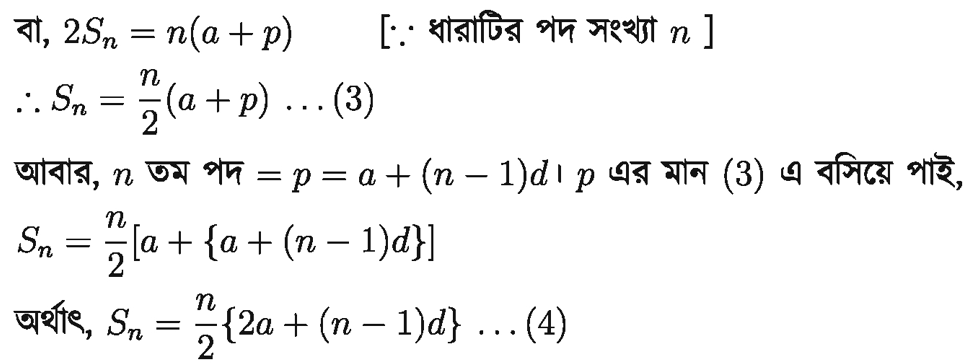
কোনো সমান্তর ধারার প্রথম পদ a, শেষ পদ p এবং পদ সংখ্যা n জানা থাকলে, (3) নং সূত্রের সাহায্যে ধারাটির সমষ্টি নির্ণয় করা যায়। কিন্তু প্রথম পদ a, সাধারণ অন্তর d, পদ সংখ্যা n জানা থাকলে, (4) নং সূত্রের সাহায্যে ধারাটির সমষ্টি নির্ণয় করা যায়।
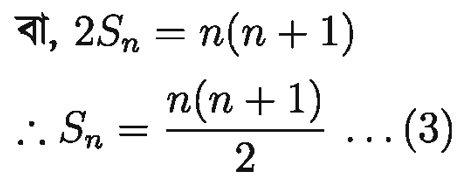
প্রথম n সংখ্যক স্বাভাবিক সংখ্যার সমষ্টি নির্ণয়
মনে করি, n সংখ্যক স্বাভাবিক সংখ্যার সমষ্টি

ধারাটিকে প্রথম পদ হতে এবং বিপরীতক্রমে শেষ পদ হতে লিখে পাওয়া যায়

উদাহরণ ৩. প্রথম 50 টি স্বাভাবিক সংখ্যার যোগফল নির্ণয় কর।
সমাধান: আমরা (3) নং সূত্র ব্যবহার করে পাই,

প্রথম 50 টি স্বাভাবিক সংখ্যার যোগফল 1275 ।
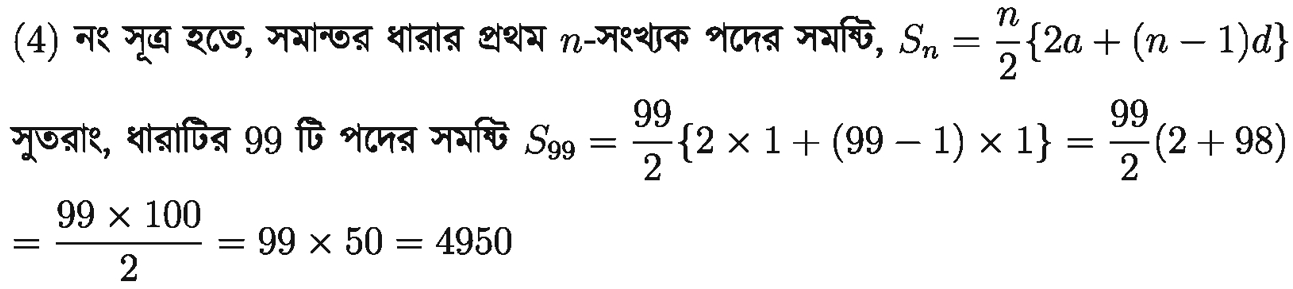
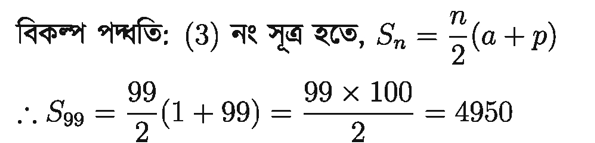
উদাহরণ ৪. 1 + 2 + 3 + 4 + . . . + 99 = কত?
সমাধান : ধারাটির প্রথম পদ a = 1, সাধারণ অন্তর d = 2 – 1 = 1 এবং শেষ পদ p = 99 ।
ইহা একটি সমান্তর ধারা।
মনে করি, ধারাটির n তম পদ = 99
আমরা জানি, সমান্তর ধারার n তম পদ = a + (n – 1)d
a + (n - 1)d = 99
বা, 1 + (n – 1)1 = 99
বা, 1 + n − 1 = 99
n = 99
উদাহরণ ৫. 7 + 12 + 17 + . . . ধারাটির প্রথম 30 টি পদের সমষ্টি কত?
সমাধান : ধারাটির প্রথম পদ a = 7, সাধারণ অন্তর d = 12 - 7 = 5
ইহা একটি সমান্তর ধারা। এখানে পদ সংখ্যা n = 30
আমরা জানি, সমান্তর ধারার প্রথম n সংখ্যক পদের সমষ্টি,

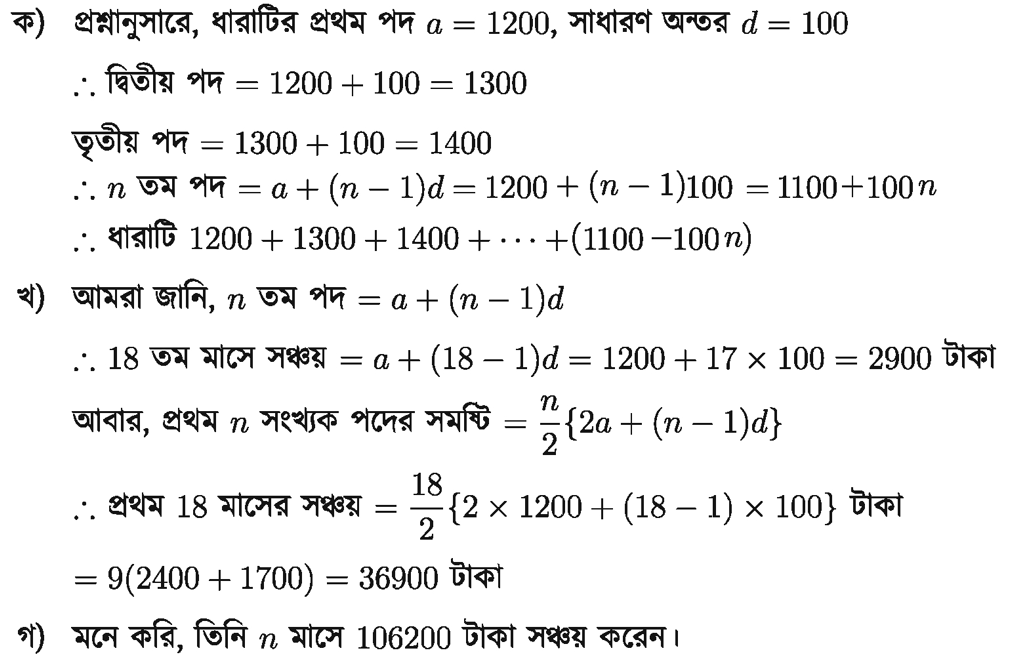
উদাহরণ ৬. রশিদ তার বেতন থেকে প্রথম মাসে 1200 টাকা সঞ্চয় করেন এবং পরবর্তী প্রতিমাসে এর পূর্ববর্তী মাসের তুলনায় 100 টাকা বেশি সঞ্চয় করেন।
ক) সমস্যাটিকে n সংখ্যক পদ পর্যন্ত ধারায় প্রকাশ কর।
খ) তিনি 18 তম মাসে কত টাকা এবং প্রথম 18 মাসে মোট কত টাকা সঞ্চয় করেন?
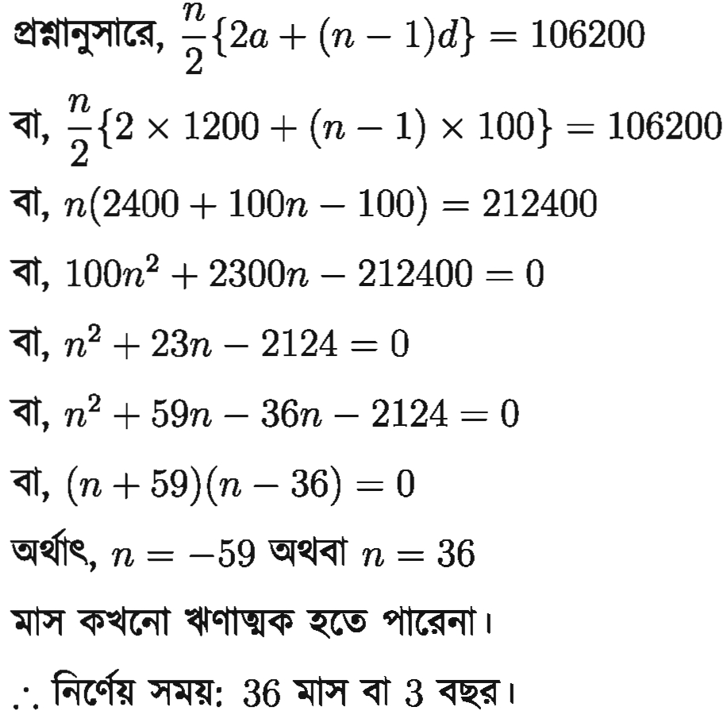
গ) তিনি কত বছরে মোট 106200 টাকা সঞ্চয় করেন?
সমাধান :
ধারার বিভিন্ন সূত্র
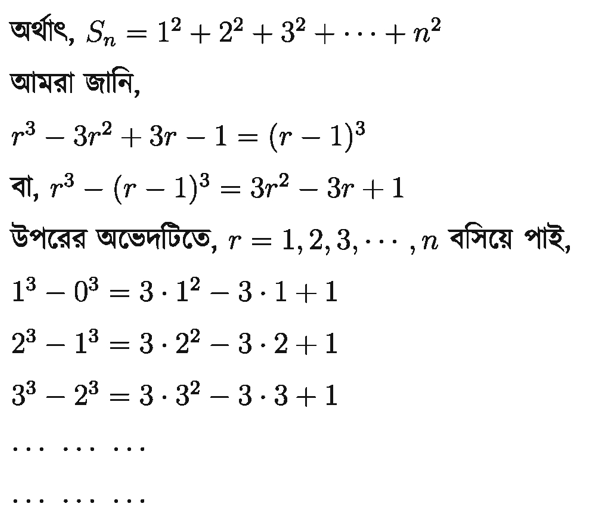
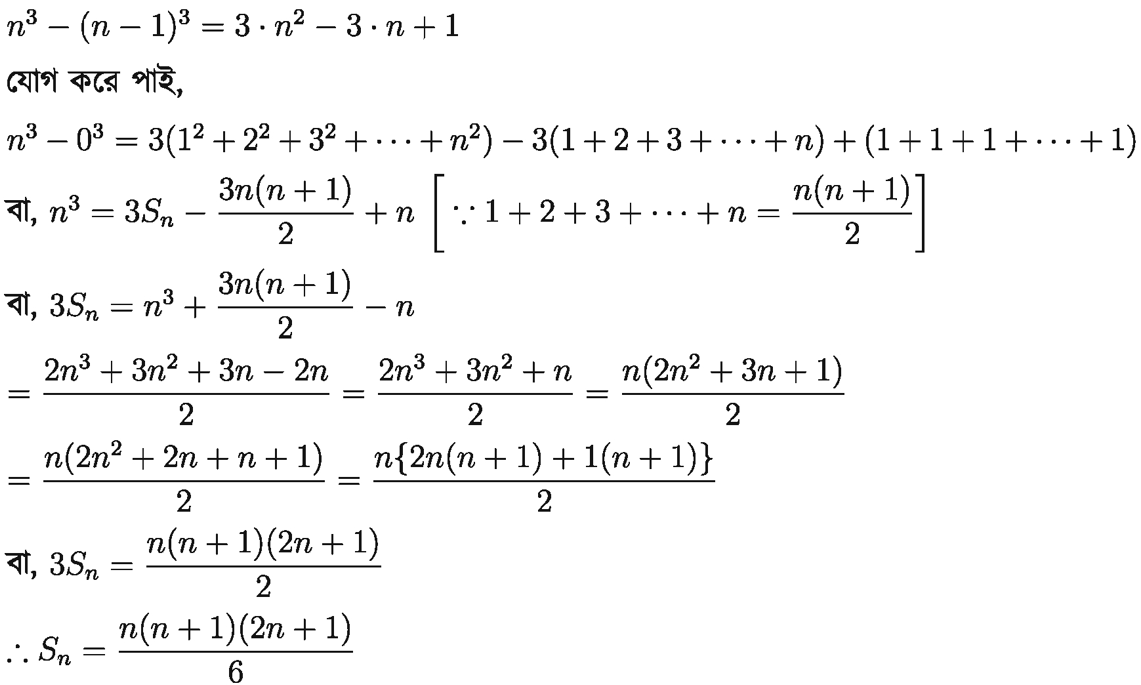
প্রথম n সংখ্যক স্বাভাবিক সংখ্যার বর্গের সমষ্টি নির্ণয়
মনে করি, প্রথম n সংখ্যক স্বাভাবিক সংখ্যার বর্গের সমষ্টি ।
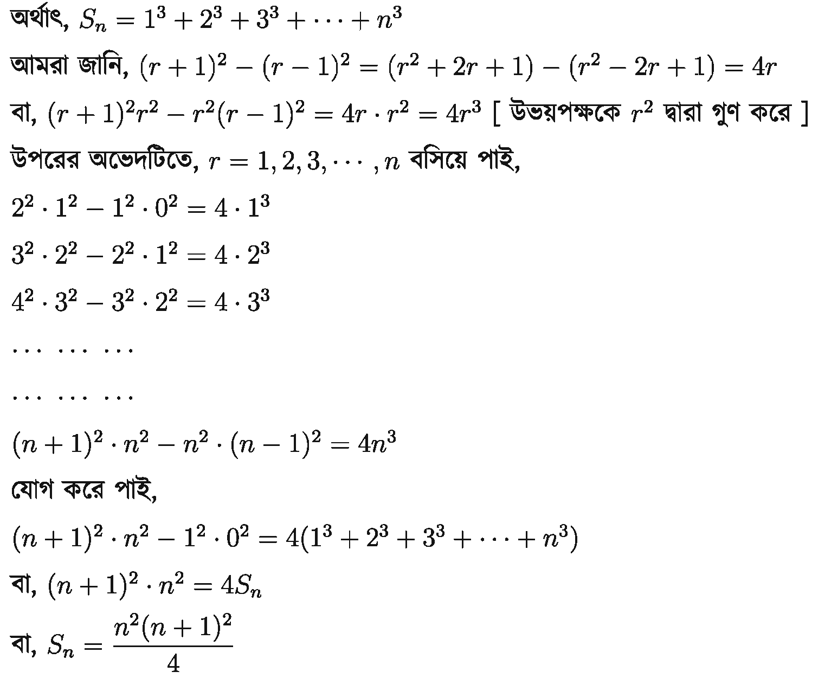
প্রথম n সংখ্যক স্বাভাবিক সংখ্যার ঘনের সমষ্টি নির্ণয়
মনে করি, প্রথম n সংখ্যক স্বাভাবিক সংখ্যার ঘনের সমষ্টি

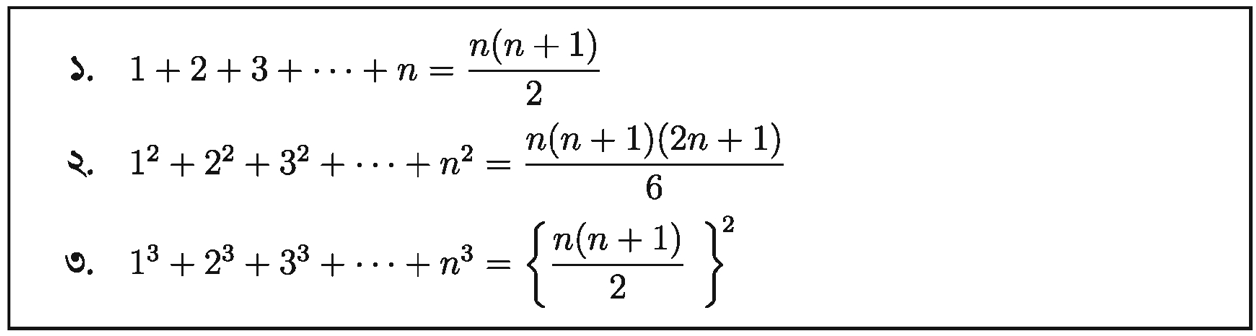
প্রয়োজনীয় সূত্র

Related Question
View All-
ক
১৭
-
খ
২১
-
গ
১৯
-
ঘ
২৩
-
ক
১
-
খ
২
-
গ
৩
-
ঘ
৪
-
ক
7
-
খ
8
-
গ
10
-
ঘ
11
-
ক
2
-
খ
4
-
গ
log 2
-
ঘ
2 log 2
-
ক
45
-
খ
165
-
গ
285
-
ঘ
855
-
ক
275
-
খ
325
-
গ
375
-
ঘ
400
১ ক্লিকে প্রশ্ন, শীট, সাজেশন ও
অনলাইন পরীক্ষা তৈরির সফটওয়্যার!
শুধু প্রশ্ন সিলেক্ট করুন — প্রশ্নপত্র অটোমেটিক তৈরি!
Related Question
Complete Exam
Preparation
Learn, practice, analyse and improve


Question Analytics
মোট উত্তরদাতা
জন