Noun (বিশেষ্য)
যে word দ্বারা কোন কিছুর নাম প্রকাশ করা হয় তাকেই noun বলে ।
যেমনঃ Man, Girl, Kamal, Badal, Rahim, Riya,, Dhaka, Bangladesh, Kolkata, Delhi.
Jhon Seely তাঁর Oxford A-Z of Grammar & Punctuation বইতে লেখেন,
“Nouns are words used to identify people, places, things, and ideas.”
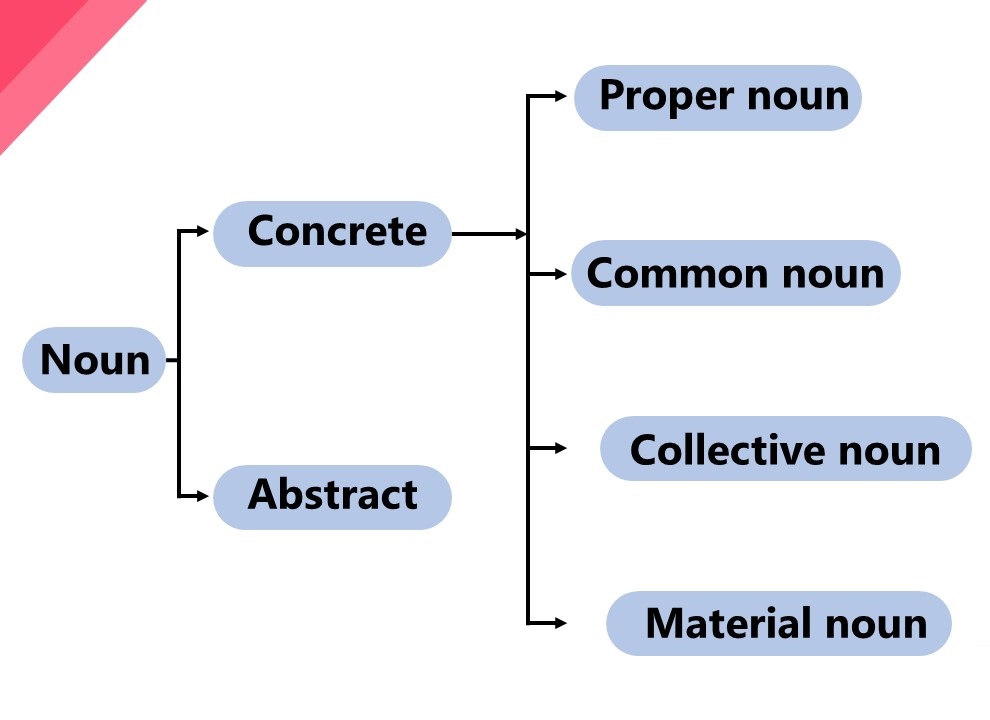
Concrete Noun: যে Noun এর বাহ্যিক বা দৈহিক অবস্থিতি আছে এবং যাকে ইন্দ্রিয়ের দ্বারা উপলব্ধি করা যায় তাকে Concrete Noun বলে। যেমন: boy, book ইত্যাদি।
Noun কে প্রধানত পাঁচ ভাগে ভাগ করা হয়। যথা-
- Proper Noun
- Common Noun
- Collective Noun
- Material Noun
- Abstract Noun
Concrete Noun:
Abstract Noun:যেগুলোর কোনো শারীরিক অস্তিত্ব নেই। এগুলো দেখা বা ছোঁয়া যায় না, কেবল মন দিয়ে উপলব্ধি করতে হয় (যেমন- কোনো গুণ, অবস্থা বা ধারণার নাম)।
উদাহরণ: Honesty (সততা), Love (ভালোবাসা), Kindness (দয়া), Freedom (স্বাধীনতা)।


# বহুনির্বাচনী প্রশ্ন

1. Proper Noun :
যেসকল noun দ্বারা কোনো নির্দিষ্ট ব্যক্তি, বস্তু, স্থান ইত্যাদির নাম বুঝায়, তাকে Proper Noun বলে। Proper Noun সবসময় Capital Letter দিয়ে শুরু হয়।
Example of proper noun: Bangladesh, Karim, Saturday, Dhaka, Tamim, The Padma, etc.
proper noun আরো কিছু সহজ উদহারণ দেখে নিন:
- দিনের নাম: Monday, Sunday, Saturday, etc
- স্থানের নাম: Canada, Cumilla, Dhaka, India, Japan, etc.
- ধর্মের নাম: Islam, Christian, Hinduism, Buddhism, etc.
- জাতির নাম: British, American, Greek, Indian, etc.
- প্রতিষ্ঠানের নাম: Oxford University, Dhaka University, Nike, Apple, Microsoft, etc.
- মানুষের নাম: Amir, Kabir, Shakil, Mustafizur, Muhammad, etc.

# বহুনির্বাচনী প্রশ্ন
Noun
Pronoun
Adjective
Adverb
2. Common Noun:
যে Noun দ্বারা একই শ্রেণির ব্যক্তি, বস্তু, স্থান বা প্রাণীর সাধারণ নাম বুঝায় তাকে common noun বলে।
Student (সব ছাত্রকে বোঝায়, নির্দিষ্ট কাউকে নয়)।
River (যেকোনো নদী হতে পারে)।
City (যেকোনো শহর)।
Teacher (শিক্ষক জাতি)।
Example:
- I like the story of Shakespeare. (Shakespeare নির্দিষ্ট একজন ব্যক্তির নাম)
- They cut the tree. ( এখানে tree শব্দটি দ্বারা সকল প্রকার গাছকে বুঝানো হয়েছে)
The Padma is a big river.(এখানে river শব্দটি দ্বারা সকল নদীকে বুঝানো হয়েছে)
# বহুনির্বাচনী প্রশ্ন
Alfred B. Nobel, a Swedish inventor and philanthropist, gave most of his vast fortune in trust as a fund from which annual prizes could be awarded to individuals and organizations who had achieved the greatest benefit to humanity in a particular year. Originally, there were six classifications for outstanding contributions designated in Nobel's will including chemistry, physics, physiology or medicine, literature and international peace. The prizes are administered by the Novel Foundation in Stockholm. In 1969, a prize for economics to be funded by the Central Bank of Sweden was added.
If the inventors of the first heavier-than-air machines capable of powered flight had been transported forward 100 years to the present day, they might be astonished at the way that those who followed them have colonised the air. Today's vehicles bear little resemblance to the shaky craft flown at Kitty Hawk on December 17th 1903, by Wilbur and Orville Wright. New craft have broken the sound barrier, mastered vertical take-off and landing, and visited the moon.
Alfred B. Nobel, a Swedish inventor and philanthropist, gave most of his vast fortune in trust as a fund from which annual prizes could be awarded to individuals and organizations who had achieved the greatest benefit to humanity in a particular year. Originally, there were six classifications for outstanding contributions designated in Novel's will including chemistry, physics, physiology or medicine, literature and international peace. The prizes are administered by the Novel Foundation in Stockholm. In 1969, a prize for economics to be funded by the Central Bank of Sweden was added.
3. Collective Noun:
যে Noun দ্বারা এক জাতীয় কতগুলো ব্যক্তি বা বস্তুর সমষ্টিকে বোঝায়, তাকে Collective Noun বলা হয়।
যেমনঃ
Class (একদল ছাত্রছাত্রী)।
Army (সৈনিকের দল)।
Team (খেলোয়াড়দের দল)।
Flock (পাখি বা ভেড়ার পাল)।
Jury (বিচারকদের সমষ্টি)।
Example of Collective noun:
- A band of musicians
- Our class took a trip to Sundarbans.
- A convoy of trucks
- A flock of birds
- Bangladeshi Army is doing a great job in UN mission.
- Each team contains eleven players.
# বহুনির্বাচনী প্রশ্ন
Opera refers to a dramatic art form, originating in Europe, in which the emotional content is conveyed to the audience as much through music, both vocal and instrumental, as it is through the lyrics. By contrast, in musical theater an author's dramatic performance is primary, and the music plays a lesser role. The drama in opera is presented using the primary element of theater such as scenery, costumes, and acting. However, the words of the opera, or libretto, are sung rather than spoken. The singers are accompanied by a musical ensemble ranging from a small instrumental ensemble to a full symphonic orchestra.
Opera refers to a dramatic art form, originating in Europe, in which the emotional content is conveyed to the audience as much through music, both vocal and instrumental, as it is through the lyrics. By contrast, in musical theater an author's dramatic performance is primary, and the music plays a lesser role. The drama in opera is presented using the primary element of theater such as scenery, costumes, and acting. However, the words of the opera, or libretto, are sung rather than spoken. The singers are accompanied by a musical ensemble ranging from a small instrumental ensemble to a full symphonic orchestra.
Opera refers to a dramatic art form, originating in Europe, in which the emotional content is conveyed to the audience as much through music, both vocal and instrumental, as it is through the lyrics. By contrast, in musical theater an author's dramatic performance is primary, and the music plays a lesser role. The drama in opera is presented using the primary element of theater such as scenery, costumes, and acting. However, the words of the opera, or libretto, are sung rather than spoken. The singers are accompanied by a musical ensemble ranging from a small instrumental ensemble to a full symphonic orchestra.
যেসব noun কোনো পদার্থের সমুদয় অংশকে এককভাবে বোঝায় এবং তার অন্তর্গত কোনো খণ্ড বা অংশকে বোঝায় না তাদেরকে Material Noun বলে। এগুলোকে গণনা করা যায় না, অন্য কোনোভাবে পরিমাপ করা যায়। যেমন— diamond, gold. iron, wheat, salt, flour, milk, tea, coffee, water etc.
কিছু গুরুত্বপূর্ণ Material Noun-এর উদাহরণ নিচে দেওয়া হলো:
Water (পানি)
Gold (স্বর্ণ)
Iron (লোহা)
Milk (দুধ)
Sugar (চিনি)
Rice (চাল)
Paper (কাগজ)
Wood (কাঠ)
Oil (তৈল)
Silver (রুপা)
Material Noun চেনার সহজ উপায় হলো— এগুলো গণনা করা যায় না, শুধু ওজন বা পরিমাপ করা যায়।
যেমন: একটি 'Water' বা একটি 'Gold' বলতে পারা যায় না, কিন্তু এক লিটার পানি বা এক ভরি স্বর্ণ বলতে পারা যায়।
# বহুনির্বাচনী প্রশ্ন
যেসব noun অবস্থগত ধারণা বা গুণকে নির্দেশ করে, যাদের বাহ্যিক অস্তিত্ব নেই বা ইন্দ্রিয়ের সাহায্যে উপলব্ধি করা যায় না অর্থাৎ যাদেরকে দেখা যায় না, যাদের গন্ধ নেয়া যায় না, যাদেরকে স্পর্শ করা যায় না বা যাদের স্বাদ নেয়া যায় না, কিন্তু শুধু কল্পনা দ্বারা বা অনুভব দ্বারা বোঝা যায়, তাদেরকে Abstract Noun বলে। যেমন- agency, childhood, fatherhood, friendship, girlhood, heroism, infancy, manhood, motherhood etc.
Honesty (সততা)
Honesty is the best policy.এখানে 'Honesty' একটি গুণের নাম যা দেখা বা ছোঁয়া যায় না, কেবল অনুভব করা যায়।
Health (স্বাস্থ্য)
Health is wealth. 'Health' একটি শারীরিক অবস্থাকে বোঝাচ্ছে, তাই এটি Abstract Noun।
Poverty (দারিদ্র্য)
Poverty is a curse.'Poverty' একটি অবস্থাকে নির্দেশ করে। (বি.দ্র. 'Poor' হলো Adjective, কিন্তু 'Poverty' হলো Noun)।
Bravery (বীরত্ব)
The king was known for his bravery. রাজার সাহসিকতা বা বীরত্বের গুণকে এখানে বোঝানো হয়েছে।
Knowledge (জ্ঞান)
Knowledge is power. 'Knowledge' একটি মানসিক ধারণা বা অর্জন, যার কোনো বাহ্যিক আকার নেই।
Childhood (শৈশব)
I miss my childhood days. এটি জীবনের একটি বিশেষ সময় বা অবস্থাকে নির্দেশ করছে।
Wisdom (প্রজ্ঞা/জ্ঞান)
Wisdom is better than strength. এটি মানুষের একটি বিশেষ গুণ।
Freedom (স্বাধীনতা)
Freedom is our birthright.এটি একটি অধিকার বা ধারণার নাম।
সহজ টেকনিক:
শব্দের শেষে সাধারণত -tion, -ness, -ship, -hood, -ment, -ty, -dom, -ence/ance থাকলে সেগুলো Abstract Noun হয়। যেমন: Education, Happiness, Friendship, Movement, Kindness।
# বহুনির্বাচনী প্রশ্ন
If the inventors of the first heavier-than-air machines capable of powered flight had been transported forward 100 years to the present day, they might be astonished at the way that those who followed them have colonised the air. Today's vehicles bear little resemblance to the shaky craft flown at Kitty Hawk on December 17th 1903, by Wilbur and Orville Wright. New craft have broken the sound barrier, mastered vertical take-of and landing, and visited the mood.
Various kinds of nuclear weapons have been produceed in the past few years by many countries, This is a new and terrible development in the history of mam. Very few events can be more frightful than a nuclear war. In a nuclear war, most of the world's population will be exterminated. The few living creatures that survives will be exposed to radiation or to electrical rays harmful to life. It has been said by scientists that many new diseases well be caused by radiation. There will also be an acute shortage of food, for all crops and stores will be poisoned by radiation. Most of the areas on which nuclear bombs have been dropped will be ruined. Therefore the survivors of a nuclear war will be sick, hungry and homeless. It might be better, perhaps, to be killed in a nuclear war than to survive it. It would be better still for men to learn to live in peace with one another. If this can be achieved there will be no more nuclear war.
যেসব noun-এর সংখ্যা গণনা করা যায়, তাদেরকে Countable Noun বলে। Countable Noun এর Plural হয়। যেমন-book, city, stars etc.
Countable Nouns (গণনাযোগ্য বিশেষ্য) সংখ্যায় প্রকাশ করা যায় বলে এদের দুটি রূপ থাকে:
- Singular (একবচন)
- Plural (বহুবচন)।
বেশিরভাগ Countable Noun-এর শেষে 's' বা 'es' যোগ করে বহুবচন করা হয়।
Book= Books
Pen = Pens
Bus = Buses (শেষে s, sh, ch, x থাকলে 'es' হয়)
Mango = Mangoes
কিছু Noun-এর ভেতরে vowel পরিবর্তন করে plural করতে হয়, যা পরীক্ষায় খুব বেশি আসে।
Man =Men
Woman =Women
Foot = Feet
Tooth = Teeth
Mouse = Mice
Goose = Geese
ল্যাটিন ও গ্রীক শব্দ (Foreign Plurals)
| Singular | Plural |
| Alumnus (প্রাক্তন ছাত্র) | Alumni |
| Alumna (প্রাক্তন ছাত্রী) | Alumnae |
| Basis (ভিত্তি) | Bases |
| Crisis (সংকট) | Crises |
| Datum (উপাত্ত) | Data |
| Medium (মাধ্যম) | Media |
| Radius (ব্যাসার্ধ) | Radii |
| Syllabus (পাঠ্যসূচি) | Syllabi / Syllabuses |
| Formula(সূত্র) | Formulae / Formulas |
কিছু Countable Noun আছে যাদের একবচন ও বহুবচন একই থাকে।
Sheep (ভেড়া)
Deer (হরিণ)
Species (প্রজাতি)
Series (সিরিজ/ক্রম)
Fish (সাধারণত Fish-ই হয়, তবে বিভিন্ন প্রজাতির মাছ বোঝালে Fishes হতে পারে)
Compound Noun-এর Plural
একাধিক শব্দ মিলে Noun হলে প্রধান শব্দটির (Root word) সাথে 's' যোগ করতে হয়।
Brother-in-law = Brothers-in-law
Passer-by (পথচারী) = Passers-by
Step-son = Step-sons
Commander-in-chief = Commanders-in-chief
Note:
Countable Singular: এদের আগে অবশ্যই একটি Determiner (a, an, the, this, my ইত্যাদি) বসাতে হয়। যেমন: I have a pen. (শুধু I have pen ভুল)।
Countable Plural: এদের আগে সংখ্যা বসানো যায়। যেমন: Three stars, many problems.
Adjective of Quantity: Plural Countable Noun-এর আগে Many, Few, A few, Very few বসে। (কিন্তু Uncountable-এর আগে Much, Little বসে)।
# বহুনির্বাচনী প্রশ্ন
যেসব noun-এর সংখ্যা গণনা করা যায় না, অন্য কোনো উপায়ে পরিমাপ করা গেলেও যেতে পারে তাদেরকে Uncountable Noun বলে। Uncountable Noun এর Plural হয় না।যেমন-plural-water, honesty, air, news, physics etc.
যেসব Noun গণনা করা যায় না, শুধু পরিমাপ করা যায় বা অনুভব করা যায়, তাদের Uncountable Noun বলে।
এদের আগে a/an বসে না।
এদের সাথে s/es যুক্ত করে Plural করা যায় না।
এদের পরে সবসময় Singular Verb বসে।
নিচের শব্দগুলো দেখতে অনেক সময় Plural মনে হলেও এগুলো মূলত Uncountable:
Advice (উপদেশ)
Information (তথ্য)
Furniture (আসবাবপত্র)
Equipment (সরঞ্জাম)
Knowledge (জ্ঞান)
Money (টাকা - মনে রাখবেন 'Taka' বা 'Dollar' countable, কিন্তু 'Money' uncountable)
Homework/Work (কাজ)
Baggage/Luggage (মালামাল)
Poetry (কবিতা - 'Poem' countable কিন্তু 'Poetry' uncountable)
Scenery (দৃশ্য)
Bread (রুটি)
Traffic (যানজট)
Jewelry (অলঙ্কার)
Uncountable Noun এর পরিমাণ বোঝাতে নিচের শব্দগুলো ব্যবহৃত হয়:
Much (Many নয়)
Little / A little / The little (Few নয়)
Less / Least
Amount of (Number of নয়)
Some / Any / A lot of (এগুলো Countable ও Uncountable উভয় ক্ষেত্রেই বসে)
সরাসরি a/an বা s/es যোগ করা না গেলেও কিছু শব্দ যোগ করে এদের Countable করা যায়:
A piece of advice (একটি উপদেশ)
Two pieces of furniture (দুইটি আসবাবপত্র)
An item of news (একটি সংবাদ)
A loaf of bread (এক টুকরো রুটি)
Correct vs Incorret:
Incorrect: He gave me some advices.
Correct: He gave me some advice. (s হবে না)
Incorrect: The sceneries of Cox's Bazar are charming.
Correct: The scenery of Cox's Bazar is charming.
Incorrect: I have many works to do.
Correct: I have much work to do. (অথবা A lot of work)
# বহুনির্বাচনী প্রশ্ন
কতকগুলো noun-এর সাথে অন্যান্য noun বা অন্যান্য Parts of Speech যোগ হয়ে একটি noun বা noun phrase হিসেবে ব্যবহৃত হয়,এদেরকে Compound noun বলে। যেমন—
Noun+Noun= headmaster,bathroom,classroom
Noun+Verb-ing= housekeeping,thanksgiving etc.
দুই বা ততোধিক শব্দ একত্রিত হয়ে যখন একটিমাত্র Noun হিসেবে কাজ করে, তখন তাকে Compound Noun বলে।
উদাহরণ: Bus stop, Mother-in-law, Football, Rainfall.
গঠন প্রক্রিয়া (যেভাবে তৈরি হয়):
Noun + Noun: Toothbrush, Notebook.
Noun + Verb: Rainfall, Haircut.
Noun + Adjective: Handful, Spoonful.
Gerund + Noun: Swimming pool, Walking stick.
Verb + Preposition: Check-out, Lookout.
Compound Noun সাধারণত তিনভাবে লেখা যায়:
Open (ফাঁকা রেখে): Bus stop, Swimming pool.
Closed (একত্রে): Football, Classroom.
Hyphenated (হাইফেন দিয়ে): Mother-in-law, Six-pack.
যখন কোনো সংখ্যা এবং Noun মিলে Adjective হিসেবে কাজ করে, তখন মাঝখানে হাইফেন বসে এবং Noun-টি Singular হয়।
Example:
It was a ten-mile journey. (Ten miles নয়)
He is a five-year-old boy. (Five years নয়)
I have a hundred-taka note. (Takas নয়)
Compound Noun-কে Plural করতে হলে তার মূল শব্দ (Root word)-এর সাথে 's' যোগ করতে হয়। Passer-bys বা Brother-in-laws থাকলে , সেটি ভুল। সবসময় মূল ব্যক্তি বা বস্তুর সাথে 's' থাকবে।
Example:
Mother-in-law = Mothers-in-law
Passer-by (পথচারী)=Passers-by
Brother-in-law=Brothers-in-law
# বহুনির্বাচনী প্রশ্ন
যে সকল শব্দ কোনো noun এর পূর্বে বসে noun এর পরিমাণ, সংখ্যা, নির্দিষ্টতা, অনির্দিষ্টতা ইত্যাদি প্রকাশ করে, তাকে Determiner বা নির্দেশক শব্দ বলে।
Determiner এর কোনো নির্দিষ্ট প্রকার নেই তবে, determiner কে তিনটি প্রধান ভাগ করা যেতে পারে:
Countable Determiners: A, An, One, Every, Both, Many, Those, These, Few, A few, The few, Very few, Fewer, Fewest, Many, Many of, A number of etc.
Uncountable Determiners: Little, A The little, Very little, Less, Least, Much, Much of,A bit, Amount of etc.
Mixed Determiners: All, Any, Some, Some of, More, Most, Most of, Rest of, A lot of, Lots of, None of, No, Possessive (your, his, her, their, its), A great deal of etc.
সহজভাবে বোঝার জন্য এদের কয়েকটি ভাগে ভাগ করা যায়:
Articles: a, an, the.
Demonstratives: this, that, these, those.
Possessives: my, our, your, his, her, its, their.
Quantifiers: much, many, little, few, some, any, each, every, either, neither, all, both.
Countable vs Uncountable
Determiner ব্যবহারের প্রধান শর্ত হলো Noun-টি গণনাযোগ্য কি না তা দেখা।
| Countable Noun-এর জন্য | Uncountable Noun-এর জন্য |
| Many (I have many books.) | Much (I have much work.) |
| Few / A few / The few | Little / A little / The little |
| A number of | An amount of |
| Fewer / Fewest | Less / Least |
Few vs Little এর পার্থক্য
Few / Little: নেই বললেই চলে (Negative অর্থ)।
A few / A little: অল্প কিছু আছে (Positive অর্থ)।
The few / The little: যে অল্প একটু আছে তার সবটুকুই।
Each, Every, Either, Neither:
এদের পরে সবসময় Singular Noun এবং Singular Verb বসে।
Example: Each student has a book.
Either / Neither: দুইজনের মধ্যে একজনকে বোঝাতে ব্যবহৃত হয়। দুইয়ের বেশি হলে Any বা None ব্যবহৃত হয়।
Some vs Any:
Some: সাধারণত Assertive (হ্যাঁ-বোধক) বাক্যে বসে।
I have some friends.
Any: সাধারণত Negative ও Interrogative (প্রশ্নবোধক) বাক্যে বসে।
I don't have any money. / Do you have any questions?
No vs None:
No: এটি একটি Determiner, এরপরে অবশ্যই একটি Noun থাকতে হবে।
I have no money.
None: এটি Pronoun, এরপরে সরাসরি Noun বসে না।
None of them came.
All vs Both:
Both: শুধুমাত্র দুইজনের ক্ষেত্রে।
All: তিন বা তার অধিক সবার ক্ষেত্রে।
কিছু গুরুত্বপূর্ণ উদাহরণ:
He has little hope of recovery. (তার সুস্থ হওয়ার আশা নেই বললেই চলে)
There is a little milk in the glass. (গ্লাসে অল্প কিছু দুধ আছে)
Many a man was present there. (মনে রাখবেন, 'Many a' এর পর Noun ও Verb উভয়ই Singular হয়)
I have fewer friends than you. ('Friend' countable, তাই 'less' না হয়ে 'fewer' হয়েছে)
# বহুনির্বাচনী প্রশ্ন
Fill in the gaps
ইংরেজি ভাষায় এমন কিছু সুনির্দিষ্ট শব্দ আছে যেগুলো দিয়ে শুধু পুরুষ বা নারীকে বুঝায় অথবা উভয়কে বুঝায় অথবা এদের কাউকে না বুঝিয়ে অন্য কোনো অচেতন পদার্থকে বুঝায়। এই শব্দ বা word গুলোকে Gender বলে। এ সম্পর্কে বিস্তারিত আলোচনা করা হলো-
Gender প্রধানত চার প্রকার। যথা-
Masculine gender (পুং লিঙ্গ ): যে সকল noun বা pronoun দ্বারা পুরুষ বোঝায় অথবা যে সকল noun সম্পন্ন, তাকে masculine gender বলে।For example: Father, Brother, Rahim, Drone (মৌমাছি), Man, He etc.
Feminine gender (স্ত্রীলিঙ্গ): যে সকল noun বা pronoun দ্বারা স্ত্রী বোঝায় অথবা যে সকল noun স্ত্রী/মেয়ে/মহিলা সমগুণ সম্পন্ন, তাকে feminine gender বলে।
For example: Mother, Sister, Rita, Bee (মৌমাছি), Woman, She etc.
Common gender (উভয় লিঙ্গ): যে সকল noun বা pronoun দ্বারা বোঝা যায় না যে, সেকি স্ত্রী লিঙ্গ নাকি পুলিঙ্গ এমন noun বা pronoun কে common gender বলে।
For example: Baby- শিশু, Parent- বাবা/মা, Child-শিশু, Friend-বন্ধু, Infant (শিশু), Passenger- যাই, Relative- আয়, Student / ছাত্রী, Teacher- শিক্ষক, Guardian- অভিভাবক, Cousin চাচাতো ভাই বোন, Calf (বাছুর), Spouse etc.
Neuter gender (কীৰ লিঙ্গ): যে সকল noun/pronoun দ্বারা কোনো জজ বিষয়ক (non-living and lifeless things) বোঝায়, তাকে neuter gender বলে।
For example: Pen, Table Rock, Water, Milk, Stone, Computer, Mobile etc.
Gender শব্দের অর্থ হলো 'লিঙ্গ'। ইংরেজি গ্রামারে যে শব্দ বা চিহ্ন দ্বারা কোনো Noun বা Pronoun পুরুষ, স্ত্রী, কোনোটিই নয় অথবা উভয়কে বোঝায়, তাকে Gender বলে।
১. Gender-এর প্রকারভেদ:
ইংরেজি ভাষায় Gender-কে প্রধানত চার ভাগে ভাগ করা হয়েছে:
| প্রকারভেদ (Types) | ব্যাখ্যা | উদাহরণ (Examples) |
|---|---|---|
| Masculine Gender | কেবল পুরুষ জাতিকে বোঝায়। | Father, Brother, King, Lion, Boy. |
| Feminine Gender | কেবল স্ত্রী জাতিকে বোঝায়। | Mother, Sister, Queen, Lioness, Girl. |
| Common Gender | পুরুষ বা স্ত্রী উভয়কেই বোঝাতে পারে। | Teacher, Student, Friend, Baby, Doctor. |
| Neuter Gender | কোনো জড় বস্তু বা অচেতন পদার্থকে বোঝায়। | Book, Pen, Table, Chair, Computer. |
২. Masculine থেকে Feminine করার প্রধান তিনটি নিয়ম:
ক) সম্পূর্ণ ভিন্ন শব্দ ব্যবহার করে:
কিছু ক্ষেত্রে Masculine ও Feminine শব্দের মধ্যে কোনো মিল থাকে না।
Boy — Girl
Husband — Wife
Brother — Sister
Uncle — Aunt
খ) শব্দের শেষে '-ess' যুক্ত করে:
অনেক Masculine শব্দের শেষে সরাসরি বা কিছু পরিবর্তন করে 'ess' যুক্ত করে স্ত্রীলিঙ্গ করা হয়।
Author — Authoress
Lion — Lioness
Prince — Princess
Actor — Actress (এখানে 'o' উঠে গেছে)
গ) Compound Noun-এর অংশ পরিবর্তন করে:
যৌগিক শব্দের মূল পুরুষবাচক অংশটিকে স্ত্রীবাচক শব্দ দিয়ে পরিবর্তন করা হয়।
Grandfather — Grandmother
He-goat — She-goat
Fisherman — Fisherwoman
Landlord — Landlady
৩. Personification (ব্যক্তিত্ব আরোপ):
মাঝে মাঝে অচেতন বা জড় বস্তুকেও সজীব কল্পনা করে Gender নির্ধারণ করা হয়:
Masculine: শক্তি, বিশালতা বা ভয়ঙ্কর কিছু বোঝাতে (যেমন: The Sun, Summer, Death, Winter)।
Feminine: কোমলতা, সৌন্দর্য বা উর্বরতা বোঝাতে (যেমন: The Moon, Nature, Spring, Earth, Mercy)।
# বহুনির্বাচনী প্রশ্ন
cob
drake
gender
doe
Masculine Gender (পুংলিঙ্গ) বলতে সেইসব Noun বা Pronoun-কে বোঝায়, যা দ্বারা কেবল পুরুষ জাতি বা পুরুষ প্রাণীকে নির্দেশ করা হয়।
১. সাধারণ উদাহরণ:
ব্যক্তি: Father, Son, Brother, King, Uncle, Man, Boy.
প্রাণী: Lion, Tiger, Bull, Horse, Cock, Gander.
২. বিশেষ বৈশিষ্ট্য (Personification):
ইংরেজি গ্রামারে মাঝে মাঝে কিছু অপ্রাণিবাচক বা জড় বস্তুকেও Masculine হিসেবে গণ্য করা হয়। যখন কোনো বস্তুর মধ্যে শক্তি (Strength), বিশালতা (Greatness) বা ভয়ঙ্কর (Violent) ভাব ফুটে ওঠে, তখন তাকে Masculine Gender হিসেবে ধরা হয়।
উদাহরণ: The Sun, Death, Winter, Summer, Time, War.
বাক্যে প্রয়োগ: Death lays his icy hands on kings. (এখানে মৃত্যুকে পুরুষ হিসেবে কল্পনা করা হয়েছে)।
৩. Masculine Gender চেনার উপায়:
যেকোনো পুরুষবাচক সম্পর্কের নাম, পুরুষবাচক পেশা (যেখানে আলাদা স্ত্রীবাচক রূপ আছে) এবং পুরুষ প্রাণীর নামই Masculine Gender।
| Masculine | Feminine (বিপরীত রূপ) |
|---|---|
| Monk | Nun |
| Nephew | Niece |
| Hero | Heroine |
| Groom | Bride |
| Widower | Widow |
| Drake | Duck |
৪. সঠিক প্রয়োগ:
বাক্যে Masculine Gender-এর পরিবর্তে Pronoun হিসেবে সাধারণত He, His, Him, Himself ব্যবহৃত হয়।
Example: The lion is the king of the forest. He is very strong.
# বহুনির্বাচনী প্রশ্ন
Feminine Gender (স্ত্রীলিঙ্গ) বলতে সেইসব Noun বা Pronoun-কে বোঝায়, যা দ্বারা কেবল স্ত্রী জাতি বা স্ত্রী প্রাণীকে নির্দেশ করা হয়।
১. সাধারণ উদাহরণ:
ব্যক্তি: Mother, Daughter, Sister, Queen, Aunt, Woman, Girl.
প্রাণী: Lioness, Tigress, Cow, Mare, Hen, Duck.
২. বিশেষ বৈশিষ্ট্য (Personification):
ইংরেজি গ্রামারে অনেক সময় জড় বস্তু বা বিমূর্ত ধারণাকে Feminine হিসেবে গণ্য করা হয়। যখন কোনো কিছুর মধ্যে কোমলতা (Gentleness), সৌন্দর্য (Beauty), স্নিগ্ধতা বা উর্বরতা প্রকাশ পায়, তখন তাকে Feminine Gender হিসেবে ধরা হয়।
উদাহরণ: The Moon, Earth, Nature, Spring, Mercy, Hope, Charity, Peace.
বাক্যে প্রয়োগ: Nature offers her lap to everyone. (এখানে প্রকৃতিকে নারী বা মা হিসেবে কল্পনা করা হয়েছে)।
৩. Masculine থেকে Feminine পরিবর্তনের কিছু উদাহরণ:
| Masculine (পুরুষ) | Feminine (স্ত্রী) | পরিবর্তনের ধরন |
|---|---|---|
| Sir | Madam | ভিন্ন শব্দ |
| Poet | Poetess | '-ess' যুক্ত করে |
| Tiger | Tigress | বানান পরিবর্তন + '-ess' |
| He-goat | She-goat | Compound শব্দ পরিবর্তন |
| Lad | Lass | সম্পূর্ণ ভিন্ন রূপ |
৪. সঠিক প্রয়োগ:
বাক্যে Feminine Gender-এর পরিবর্তে Pronoun হিসেবে সাধারণত She, Her, Hers, Herself ব্যবহৃত হয়।
Example: The queen lost her ring.
Example: The Moon has hidden her face behind the clouds.
৫. দেশ এবং জাহাজের ক্ষেত্রে ব্যবহার:
ঐতিহ্যগতভাবে দেশ (Country) এবং জাহাজ (Ship)-কে ইংরেজিতে প্রায়ই Feminine হিসেবে সম্বোধন করা হয়।
Example: Bangladesh is proud of her heritage.
Example: The Titanic hit an iceberg on her maiden voyage.
# বহুনির্বাচনী প্রশ্ন
Common Gender (উভয়লিঙ্গ) বলতে সেইসব Noun বা Pronoun-কে বোঝায়, যা দ্বারা পুরুষ এবং স্ত্রী উভয় জাতিকেই বোঝানো যেতে পারে। অর্থাৎ, এই শব্দগুলো শুনে নির্দিষ্টভাবে নিশ্চিত হওয়া যায় না যে ব্যক্তিটি পুরুষ নাকি নারী।
১. সাধারণ কিছু উদাহরণ:
পেশা (Profession): Teacher, Doctor, Lawyer, Scientist, Engineer, Pilot, Journalist.
সম্পর্ক ও পরিচয়: Friend, Cousin, Student, Parent, Neighbor, Person, Child.
প্রাণী: Bird, Fish, Animal, Cat, Sheep.
২. মূল বৈশিষ্ট্যসমূহ:
এই শব্দগুলো লিঙ্গ নিরপেক্ষ (Gender Neutral)।
এগুলো ব্যবহারের ফলে ভাষা আরও সংক্ষিপ্ত ও সহজ হয়, কারণ নারী ও পুরুষের জন্য আলাদা শব্দ ব্যবহার করার প্রয়োজন পড়ে না।
আধুনিক ইংরেজিতে জেন্ডার বৈষম্য দূর করতে Common Gender-এর ব্যবহার ক্রমশ জনপ্রিয় হচ্ছে (যেমন: Chairman-এর পরিবর্তে Chairperson)।
৩. Pronoun বা সর্বনামের ব্যবহার:
Common Gender-এর ক্ষেত্রে Pronoun ব্যবহারের সময় কিছু বিষয় খেয়াল রাখতে হয়:
ঐতিহ্যগতভাবে Common Gender-এর সাথে He/His/Him ব্যবহৃত হতো।
Example: Every student should do his duty.
আধুনিক ইংরেজিতে এবং বর্তমানে প্রচলিত নিয়মে He/She অথবা বহুবচন হিসেবে They/Their ব্যবহার করা বেশি গ্রহণযোগ্য।
Example: A teacher should love their students.
Example: If a friend needs help, give it to them.
৪. Masculine/Feminine থেকে Common Gender-এ রূপান্তর:
| Masculine | Feminine | Common Gender |
|---|---|---|
| Father | Mother | Parent |
| Son | Daughter | Child |
| Brother | Sister | Sibling |
| King | Queen | Monarch |
| Actor | Actress | Actor / Performer |
৫. সঠিক প্রয়োগের উদাহরণ:
The doctor is examining the patient. (এখানে ডাক্তার পুরুষ বা মহিলা যে কেউ হতে পারেন)।
My cousin is coming to visit us.
The baby is crying for its mother. (মনে রাখবেন, ছোট শিশুদের ক্ষেত্রে অনেক সময় Neuter হিসেবে 'it' ব্যবহৃত হয়)।
# বহুনির্বাচনী প্রশ্ন
Neuter Gender (ক্লীবলিঙ্গ) বলতে সেইসব Noun বা Pronoun-কে বোঝায়, যার প্রাণ নেই অর্থাৎ যা অচেতন বা জড় পদার্থ। এটি দ্বারা পুরুষ বা স্ত্রী কোনোটিকেই বোঝানো হয় না।
১. সাধারণ কিছু উদাহরণ:
জড় বস্তু: Book, Pen, Table, Chair, Computer, Mobile, Stone.
পদার্থ: Water, Gold, Iron, Oil, Rice.
বিমূর্ত ধারণা (Abstract Ideas): Honesty, Love, Truth, Happiness, Knowledge.
সমষ্টিবাচক বিশেষ্য (Collective Noun): Class, Army, Team, Fleet (এগুলো সাধারণত Neuter হিসেবে গণ্য হয়)।
২. বিশেষ ক্ষেত্রসমূহ (ব্যতিক্রম):
ইংরেজি গ্রামারে কিছু ক্ষেত্রে প্রাণ থাকা সত্ত্বেও তাদের Neuter Gender হিসেবে ধরা হয়:
নিম্নশ্রেণীর প্রাণী (Lower Animals): ছোট ছোট পতঙ্গ বা সাধারণ প্রাণীদের ক্ষেত্রে অনেক সময় লিঙ্গ নির্ধারণ না করে Neuter ধরা হয়।
Example: The ant is a hardworking insect. It stores food for winter.
ছোট শিশু (Infant/Baby): যখন কোনো শিশুর লিঙ্গ (ছেলে না মেয়ে) গুরুত্বপূর্ণ নয় বা জানা নেই, তখন তাকে Neuter হিসেবে ধরা হয়।
Example: The baby is crying for its toy.
৩. সর্বনাম বা Pronoun-এর ব্যবহার:
Neuter Gender-এর পরিবর্তে Pronoun হিসেবে সাধারণত It, Its, Itself ব্যবহৃত হয়।
Example: I have a car. It is red.
Example: The tree has lost its leaves.
৪. Neuter Gender চেনার উপায়:
সহজভাবে বলতে গেলে, যে সব জিনিসের প্রাণ নেই এবং যারা বংশবিস্তার করতে পারে না, তারাই Neuter Gender। তবে মনে রাখবেন, আধুনিক ইংরেজি সাহিত্যে অনেক সময় গাছকে (Tree) সজীব সত্তা হিসেবে Feminine বা Masculine হিসেবেও কল্পনা করা হয়।
Gender একনজরে:
| Gender Type | নির্দেশ করে | উদাহরণ |
|---|---|---|
| Masculine | পুরুষ | King, Lion |
| Feminine | স্ত্রী | Queen, Lioness |
| Common | উভয় (পুরুষ/স্ত্রী) | Student, Friend |
| Neuter | জড় বস্তু | Book, Table |
# বহুনির্বাচনী প্রশ্ন
Number শব্দটি দ্বারা কোনো কিছুর সংখ্যাকে বুঝানো হয়। আর Grammar-এর ভাষায়, যে কোনো ব্যক্তি, বস্তু বা প্রাণীর সংখ্যাকে Number বলে। Number প্রধানত দুই প্রকার :
- Singular Number এবং
- Plural Number।
Singular number-কে plural number-এ পরিণত করার জন্য কিছু সুনির্দিষ্ট নিয়ম রয়েছে। তবে সাধারণত কিছু word আছে যেগুলোর শেষে শুধু 's' যোগ করে plural করা যায়। যেমন— Book-books, Pen-pens, Boy boys, Cat-cats, Dog-dogs ইত্যাদি ।
1. যেসব Word-এর শেষে s, ss, sh, ch, x, z রয়েছে, তাদের শেষে 'es' যোগ করে plural করা যায়। তবে ch-এর উচ্চারণ যদি 'ক'-এর মতো হয়, তাহলে তার শেষে শুধু 's' যোগ করে plural করতে হয়। যেমন - Bus buses, Assasses, Dish dishes, Branch branches, Stomach (স্টমাক) stomachs, Monarch (মনাক) – monarchs, Fox foxes, Fez-fezes ইত্যাদি।
2. Singular noun-এর শেষে f বা fe থাকলে plural করার সময় f বা fe -এর পরিবর্তে ves যোগ করে plural করতে হয়। যেমন—
| Singular | Plural |
| Calf-বাছুর | Calves |
| Half- অর্ধেক | Halves |
| Thief- চোর | Thieves |
3. কিন্তু Noun এর শেষে if it eel of fযাগ করে plural করতে হয়।
| Singular | Plural |
| Gull- উপসাগর | Gulfs |
| Belief | Beliefs |
4. যেসব word-এর শেষে থাকে এবং o-এর পূর্বে একটি consonant থাকে, সে সকল word- এর শেষে es যোগ করে plural করা হয় আর -এর পূর্বে vowel থাকলে শুধু s যোগ করে plural করতে হয়।যেমন -Mango-mangoes, Zero-zeroes, Hero-heroes ইত্যাদি।
5. তবে, কিছু Noun-এর শেষে -এবং o-এর পূর্বে একটি consonant থাকলেও শুধু s যোগ করে plural করতে হয়। যেমন— Singular
| Singular | Plural |
| Canto | Cantos |
| Piano | Pianos |
| Dynamo | Dynamos |
6.যেসব Singular noun-এর শেষে y এবং y-এর পূর্বে consonant রয়েছে, সেসব ক্ষেত্রে y-এর পরিবর্তে । এবং শেষে es যোগ করে plural করতে হয়। যেমন-Army - Armies, Country - Countries
7.কিন্তু y এর পূর্বে Consonant না থেকে যদি vowel থাকে, তাহলে শুধু যোগ করে plural করতে হয়। যেমন— Toy -Toys, Monkey - Monkeys
8.কতগুলো noun-এর মাঝের vowel পরিবর্তন করে plural করতে হয়। যেমন—Foot - Feet,Tooth - Teeth,Woman – Women
9.আবার, কিছু word-এর মাঝের consonant এবং vowel পরিবর্তন করে singular থেকে plural করা হয়। যেমন— Louse (উকুন)-lice, Mouse mice, অপারে Dormouse (ইঁদুর বা কাটবিড়ালির মতো এক প্রকার ছোট প্রাণী)- dormice ইত্যাদি।
10.কিছু Noun-এর শেষে en, ren, ne যোগ করে plural করতে হয়। যেমন— Brother-brethren (brothers), Child-children, Ox-oxen, Cow-kine (cows).
11.Singular number এর শেষে (um থাকলে plural করার সময় um-এর পরিবর্তে বসবে। কখনো কখনো Singular number এর সঙ্গে ও যোগ করে plural করা হয় । তবে প্রশ্নপত্রে দুটিই থাকলে প্রথমটি গ্রহণ করতে হবে। যেমন—
| Singular | Plural |
| Addendum | Addenda |
| Agendum | Agenda |
| Aquarium | Aquaria/Aquariums |
| Datum | Data |
| Curriculum | Curricula |
12.Singular number-এর শেষে is থাকলে plural করার সময় is এর পরিবর্তে es আসবে। যেমন—Analysis (বিশ্লেষণ)-Analyses, Axis (অক্ষ)-Axes.
13.Singular-এর শেষে us থাকলে plural করার সময় us এর স্থলে i হবে অথবা us এর পর es করতে হবে।যেমন-Alumnus-Alumni,Focus-Foci/Focuses,Genius-Genii.
14.Singular number এর শেষে a থাকলে এর সাথে s অথবা e অথবা ta যোগ করে plural করতে হয়।যেমন-Alumna-Alumnae, Dogma-Dogmas.
15. কিছু Noun শব্দ রয়েছে যেগুলো সর্বদাই Singular হিসেবে ব্যবহৃত হয়, যেমন— advice, alphabet, bread, furniture, information, knowledge, poetry, Scenery ইত্যাদি।
16. Aircraft, brace, barracks, cops, dice, deer, dozen, gallows, grouse, headquarters, horsepower, hundred, innings, means, menes, offspring ineries, score, intone, salmon, species, sheep, swine, thousand, million billion, trillion, works (factory) ইত্যাদি শব্দের singular plural from একই। তবে dozen, hundred, score, thousand এর পূর্বে some, many থাকলে অথবা এদের পরে of থাকলে s যুক্ত হয়ে plural হয়ে থাকে। যেমন— Some dozens, many dozens কিন্তু এদের plural + of দ্বারা অনেক পরিমাণ বোঝায়। যেমন— hundreds of times (শত শত বার), thousands of people (হাজার হাজার লোক) ইত্যাদি ।
17. Ethics, mathematics, news, physics, politics noun গুলো দেখতে plural হলেও এগুলো singular হিসেবে ব্যবহৃত হয়।
18.কতগুলো Compound Noun-এর প্রধান অংশের সাথে 's' যোগ করে plural করতে হয়। যেমন—
| Singular | Plural |
| Brother-in-law | Brothers-in-law |
| Court-martial | Court-martials |
| Step-brother | Step-brothers |
19.সংখ্যা, প্রতীক বা বর্ণের শেষে apostrophe ('s) যোগ করে plural number-এ রূপান্তর করা যায়। যেমন— B.A's, i's ইত্যাদি।
# বহুনির্বাচনী প্রশ্ন
ইংরেজি গ্রামারে Number বা বচন দ্বারা কোনো Noun বা Pronoun-এর সংখ্যাকে বোঝানো হয়। যখন কোনো শব্দ দ্বারা কেবল একটি মাত্র ব্যক্তি, বস্তু, প্রাণী বা স্থানকে নির্দেশ করা হয়, তখন তাকে Singular Number (একবচন) বলা হয়।
১. সাধারণ উদাহরণ:
ব্যক্তি: Boy, Girl, Man, Teacher, Student.
বস্তু: Book, Pen, Chair, Mobile, Umbrella.
প্রাণী: Cat, Dog, Cow, Lion, Bird.
স্থান: City, Village, Country, School.
২. মূল বৈশিষ্ট্যসমূহ:
এটি কেবল একক সত্তাকে নির্দেশ করে।
Singular Number-এর আগে সাধারণত আর্টিকেল হিসেবে A বা An ব্যবহৃত হয় (যদি সেটি Countable Noun হয়)।
উদাহরণ: A book, An apple.
বাক্যের Subject যদি Singular হয়, তবে তার সাথে ব্যবহৃত Verb-টিও Singular হয়।
উদাহরণ: The boy plays football. (এখানে 'boy' singular বলে verb-এর সাথে 's' যুক্ত হয়েছে)।
৩. Singular থেকে Plural করার প্রাথমিক ধারণা:
সাধারণত Singular শব্দের শেষে s, es, ies অথবা ves যুক্ত করে তাকে Plural বা বহুবচনে রূপান্তর করা হয়।
Singular: Pen = Plural: Pens
Singular: Box = Plural: Boxes
Singular: Baby = Plural: Babies
৪. বিশেষ কিছু Singular শব্দ:
কিছু শব্দ আছে যাদের শেষে 's' থাকলেও তারা আসলে Singular Number হিসেবে কাজ করে এবং এদের পর Singular Verb বসে।
বিষয়ের নাম: Physics, Mathematics, Economics, Ethics.
সংবাদ বা রোগ: News, Measles, Mumps.
উদাহরণ: Mathematics is a core subject.
৫. Pronoun-এর ক্ষেত্রে Singular:
ব্যক্তি বা বস্তুর পরিবর্তে ব্যবহৃত কিছু উল্লেখযোগ্য Singular Pronoun হলো: I, He, She, It, Me, Him, Her, This, That.
# বহুনির্বাচনী প্রশ্ন
Plural Number (বহুবচন) বলতে সেইসব Noun বা Pronoun-কে বোঝায় যা দ্বারা একের অধিক ব্যক্তি, বস্তু, প্রাণী বা স্থানকে নির্দেশ করা হয়।
১. সাধারণ উদাহরণ:
ব্যক্তি: Boys, Girls, Men, Teachers, Students.
বস্তু: Books, Pens, Chairs, Mobiles, Umbrellas.
প্রাণী: Cats, Dogs, Cows, Lions, Birds.
স্থান: Cities, Villages, Countries, Schools.
২. মূল বৈশিষ্ট্যসমূহ:
এটি দুই বা ততোধিক সংখ্যাকে নির্দেশ করে।
Plural Number-এর আগে সাধারণত A বা An বসে না।
বাক্যের Subject যদি Plural হয়, তবে তার সাথে ব্যবহৃত Verb-টিও Plural হয়।
উদাহরণ: The boys play football. (এখানে 'boys' plural বলে verb-এর সাথে 's' যুক্ত হয়নি)।
৩. Singular থেকে Plural করার প্রধান নিয়মাবলি:
নিয়ম ১: সাধারণ ক্ষেত্রে
অধিকাংশ Noun-এর শেষে শুধু s যোগ করে Plural করা হয়।
Singular: Book = Plural: Books
Singular: Cow = Plural: Cows
নিয়ম ২: s, ss, sh, ch, x থাকলে
Noun-এর শেষে যদি s, ss, sh, ch (উচ্চারণ 'চ' এর মতো) বা x থাকে, তবে es যোগ করতে হয়।
Singular: Bus = Plural: Buses
Singular: Glass = Plural: Glasses
Singular: Bench = Plural: Benches
Singular: Box = Plural: Boxes
নিয়ম ৩: শেষে y থাকলে
Noun-এর শেষে যদি y থাকে এবং তার আগে একটি Consonant থাকে, তবে y উঠে গিয়ে ies বসে।
Singular: Baby= Plural: Babies
Singular: City= Plural: Cities
নিয়ম ৪: শেষে f বা fe থাকলে
Noun-এর শেষে f বা fe থাকলে সাধারণত সেগুলো উঠে গিয়ে ves বসে।
Singular: Leaf= Plural: Leaves
Singular: Wife = Plural: Wives
নিয়ম ৫: শেষে o থাকলে
Noun-এর শেষে যদি o থাকে এবং তার আগে Consonant থাকে, তবে সাধারণত es যোগ হয়।
Singular: Mango = Plural: Mangoes
Singular: Hero = Plural: Heroes
৪. Pronoun-এর ক্ষেত্রে Plural:
ব্যক্তি বা বস্তুর পরিবর্তে ব্যবহৃত কিছু উল্লেখযোগ্য Plural Pronoun হলো: We, They, Us, Them, These, Those.